The short answer
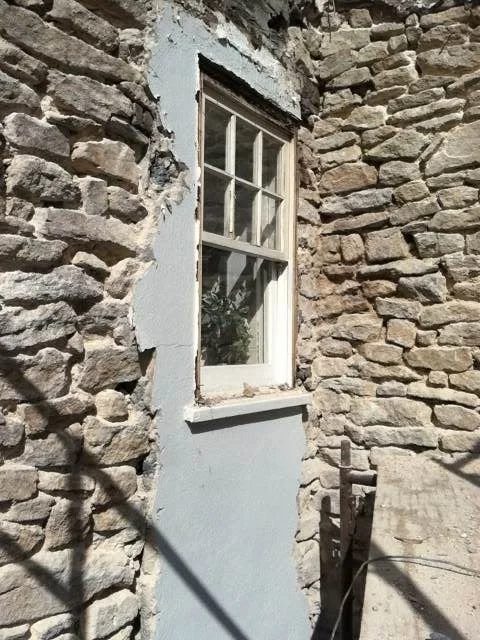
Removing stucco from a stone house starts with a small test patch to see what is underneath and how tightly the stucco is bonded. If the stone is sound and the coat comes away cleanly, the stucco is chiseled off by hand, section by section, the loose and failed mortar behind it is raked out, and the whole wall is repointed with a lime-rich mortar so it can dry out again. Not every house should be uncovered, and the test patch is how we tell you honestly.
There is no moment in our work quite like it. You chip away the first square foot of tired stucco on an old farmhouse and there it is: fieldstone laid by hand a century or two ago, waiting under a gray coat for someone to let it breathe again. It is also a real restoration project, not a weekend demolition, so here is how we do it.
Watch a plastered stone house come back
How we take stucco off a stone house
- Site walk and test patch. We look at the whole house, then open a small patch to see the stone, the joints and how the stucco is bonded.
- Protect the house. Windows, doors, plantings, water lines and electrical are protected before removal starts.
- Chisel it off by hand, section by section, so the stone face is not damaged.
- Rake out the joints to sound mortar, and reset or replace any stone that has failed with matching stone.
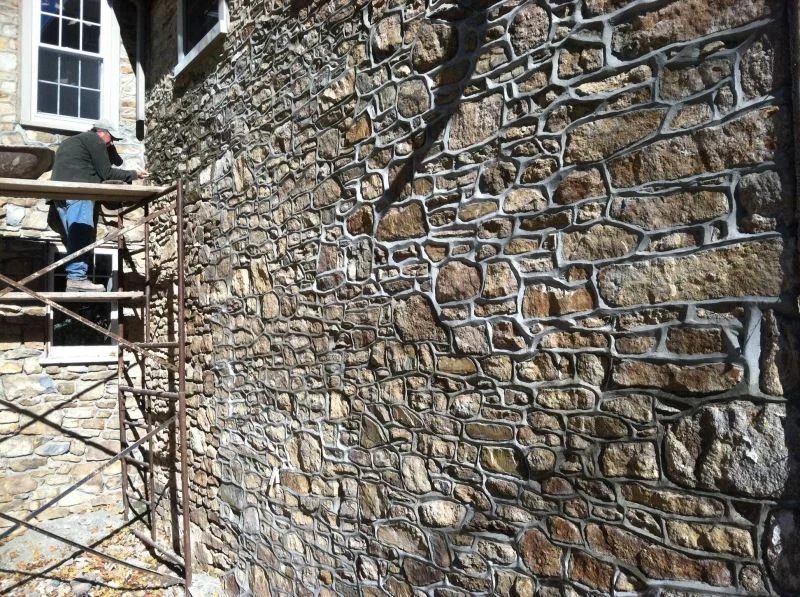
- Repoint every joint with a lime-rich mortar matched to the original. See stone repointing.
- Fix the water: gutters, downspouts and grading, so the exposed wall stays dry.
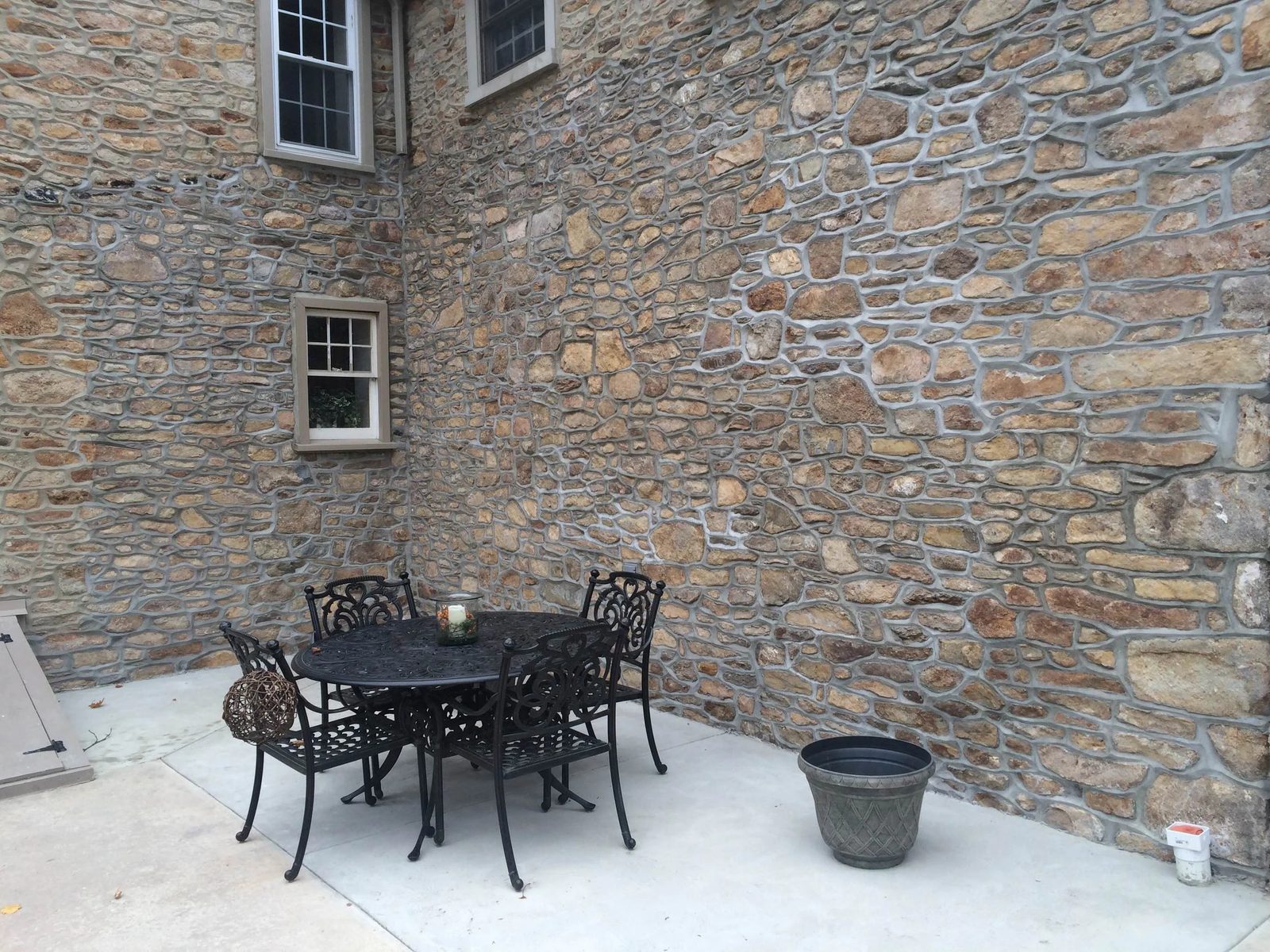
A real job: from stucco to stone in Doylestown
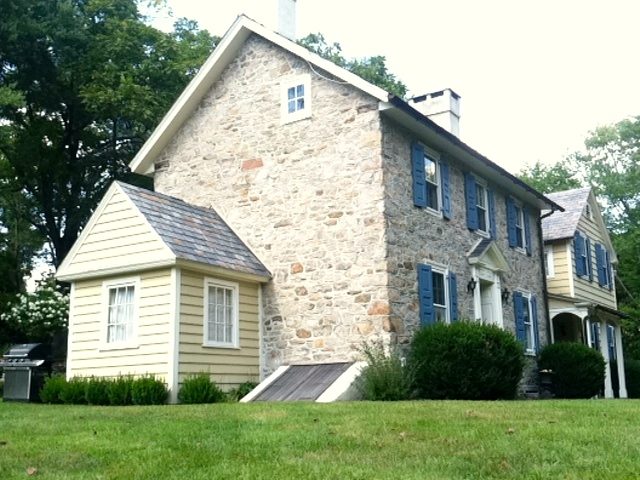
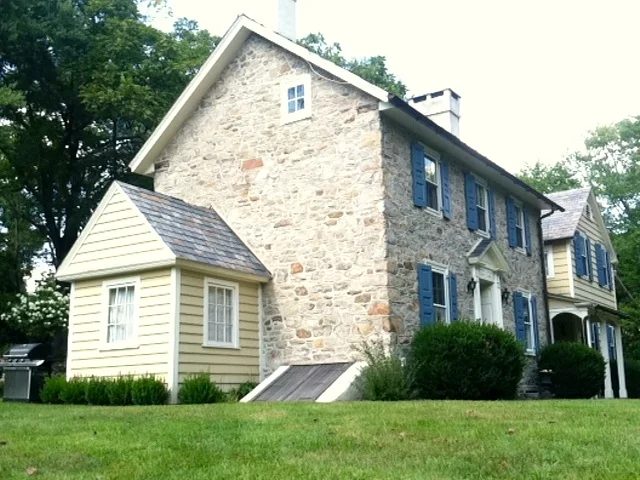
A Doylestown family hired us to replace siding with stone. Under the stucco of the main house we found the original fieldstone. The owners chose to expose and repoint it, and we expanded the patio in bluestone. See the whole project, step by step.
When we tell you to leave it on
Original lime stucco in good condition is worth keeping, and some houses were built as rough rubble that was always meant to be covered. If the test patch says the stone will not survive removal, we will say so and repair the stucco instead. Read what to know before you uncover your stone house, and see our wider historic stone home restoration work.
Questions we hear on site
Can you tell what is under the stucco before removing it all?
Will removing stucco damage the stone?
Does the stone need repointing after the stucco comes off?
Why is cement stucco bad for an old stone house?
Should every stuccoed stone house be uncovered?
How long does a stucco-to-stone restoration take?
Our other restoration services
Who does the work
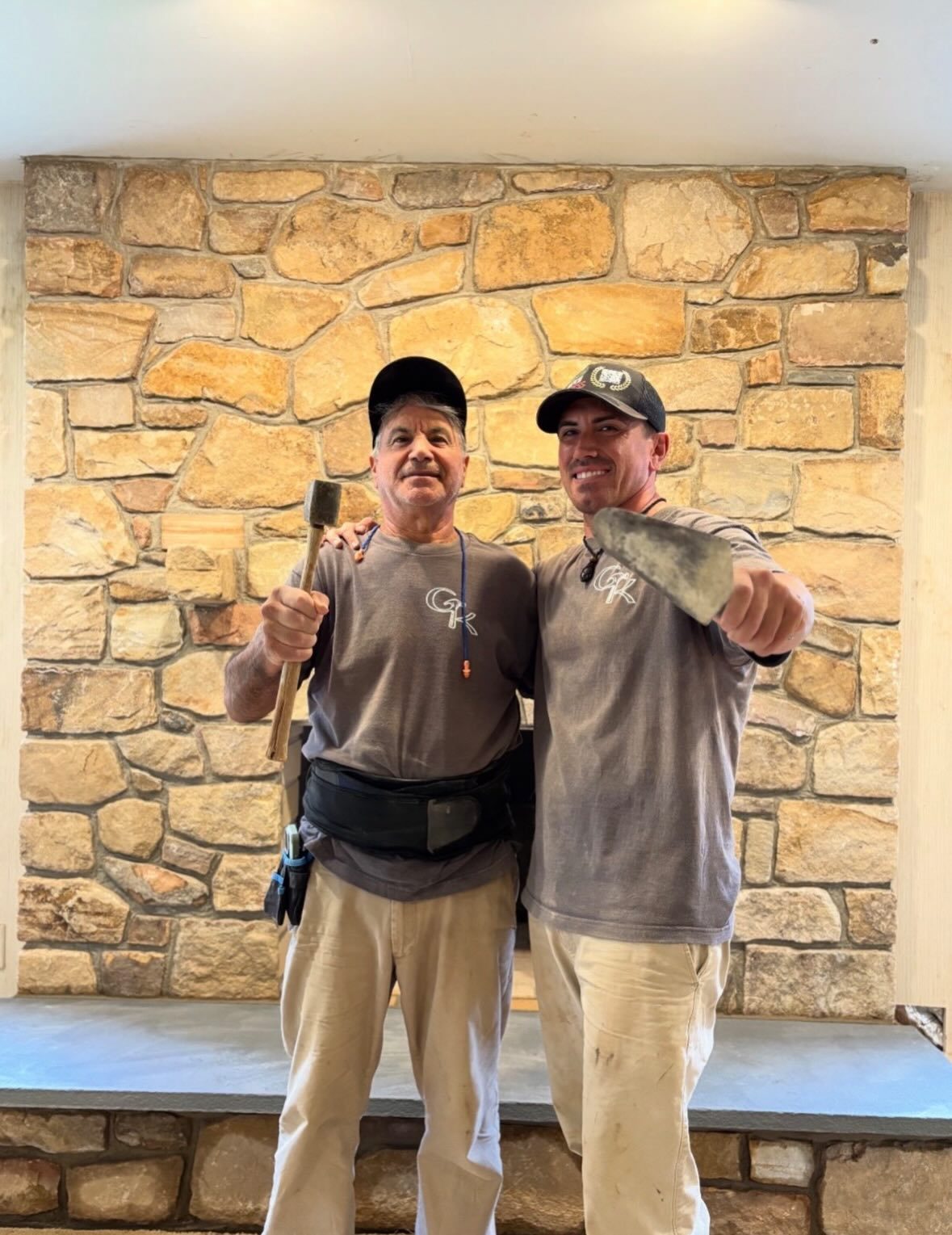
Luciano Sansalone learned stonework at fifteen beside his father and grandfather in Italy and has worked on Bucks County stone for over forty years. His son Alex is the fourth generation. The two of them inspect every property and do the work themselves. Read our story.