The short answer
Many 18th- and 19th-century stone houses in Bucks County were covered in stucco or plaster, sometimes from the start and often later. Modern cement stucco over old stone can trap moisture in the wall, which is a common reason owners take it off. Before removing it, have a mason test a small area: if the stone underneath is good, the stucco can be taken off by hand and the wall repointed with lime mortar. If the stucco is historic lime and the stone was never meant to be exposed, repairing the stucco can be the better choice.
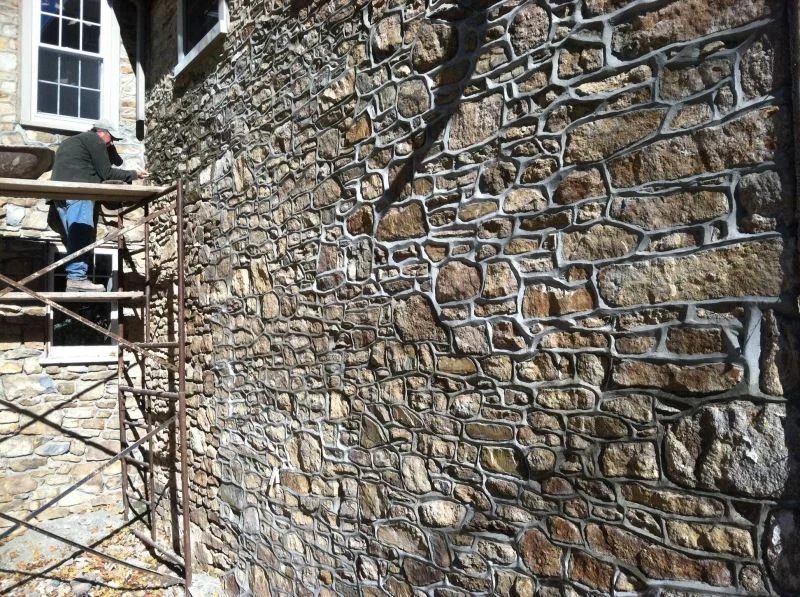
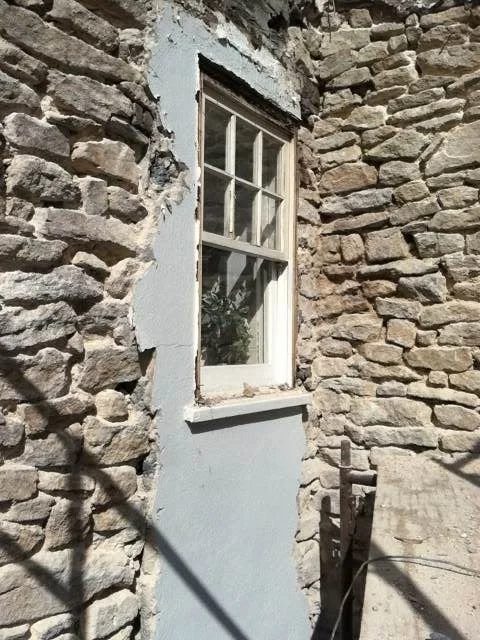
There is no moment in our work quite like it. You chip away the first square foot of tired stucco on an old farmhouse and there it is: the fieldstone the original builders laid by hand two hundred years ago, waiting under a gray coat for someone to let it breathe again. Alex filmed one of these jobs, and the reel is still one of our most-watched. People love seeing the stone come back.
But uncovering a stone house is a real restoration project, not a weekend demolition. Here is what we tell every owner before we start.
Why so many stone houses are covered
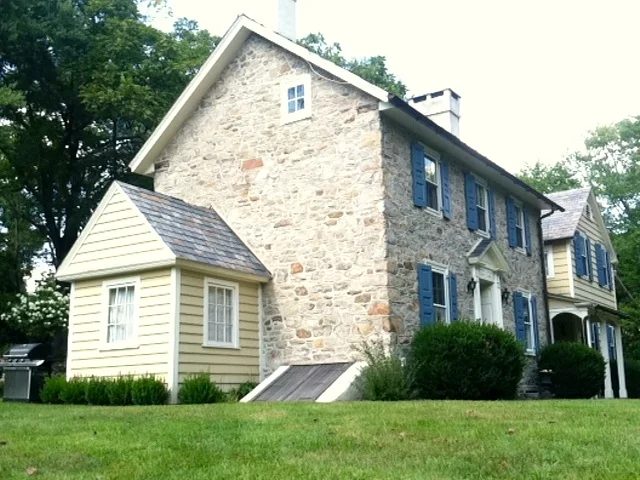
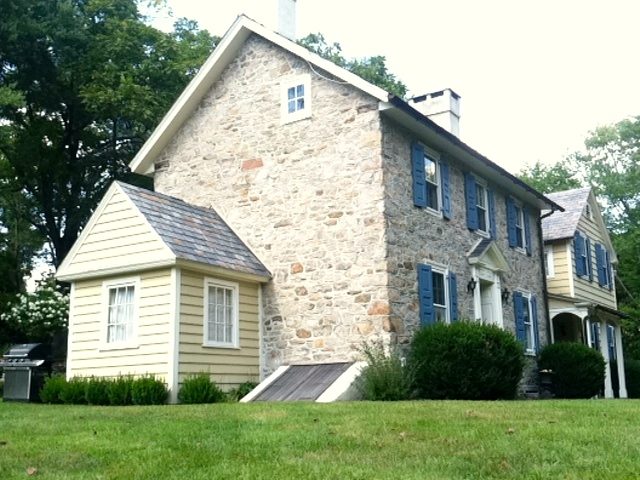
Bucks County is full of fieldstone houses, and a surprising number of them spent much of their lives under stucco or plaster. Some were rendered from the beginning, to shed water or because the stone was rough rubble never meant to be seen. Others were stuccoed later to look more fashionable, or to cover up joints nobody wanted to repoint. Over the last century, a lot of that render was patched or replaced with Portland cement stucco.
The trouble with cement stucco over old stone
Old stone walls were built with soft lime mortar, and they manage water by letting it in and letting it dry back out. A dense cement coat interrupts that. Water still gets into the wall from the top, from the ground and through every crack in the stucco, but it cannot dry back out through the face. The wall stays wet. Inside, plaster suffers. Outside, freeze-thaw pops the stucco loose in sheets, and when you tap it with a hammer handle it sounds hollow.
That is the most common reason owners call us: not only because they want the stone, but because the stucco is failing and the walls are damp.
When you should leave it on
We will not tell you to strip every house. Leave the stucco on, or repair it, when:
- It is original lime stucco in good condition. The National Park Service treats historic stucco as a character-defining feature worth repairing, not removing.
- The test patch shows the wall was built as rough rubble meant to be covered.
- The stucco is tightly bonded hard cement and removing it would tear the face off the stone. Sometimes the kindest thing is a careful repair.
- The house is in a historic district with review requirements. Check with your township first.
If the stucco stays, any repairs should be made with a breathable lime-based render, not more cement.
How we uncover a stone house
- Test patch. We open a small area to see the stone, the old pointing and how the stucco is bonded.
- Hand removal. Stucco comes off with hand tools and light chipping hammers, working with the stone, never with a grinder against the face.
- Clean the joints. Loose and powdery mortar is raked out to sound material.
- Repoint with lime. We repoint with a lime mortar matched to the house, and you choose the joint finish: smooth concave or raised convex. Read why lime matters.
- Repair what was hiding. Stucco hides cracked lintels, rotten sills and old patches. We fix the stonework and tell you about anything else we find.
Is it worth it?
For the right house, absolutely. An exposed, properly pointed fieldstone wall is the reason people fall in love with Bucks County in the first place. It is honest, it is beautiful, and when it is pointed with the right mortar it handles water the way the builders intended. Just start with a test patch and an honest opinion. We are happy to give you both, and you can see restoration jobs in our portfolio.
Questions we hear on site
Can you tell what is under the stucco before removing it all?
Will removing stucco damage the stone?
Does exposed stone need repointing after stucco comes off?
Should I put stucco back on if the stone is rough?
Further reading
About the authors
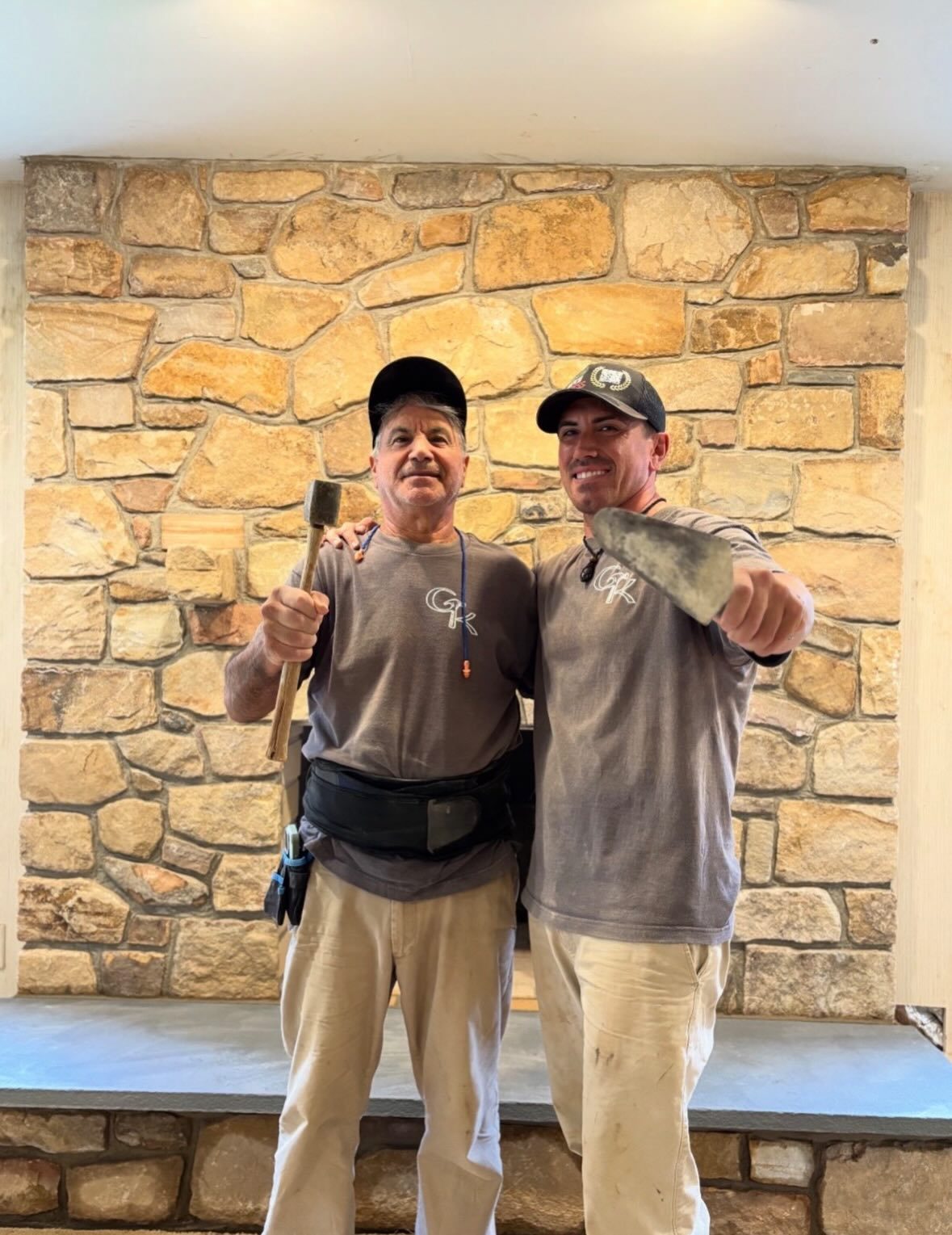
Luciano Sansalone learned stonework at fifteen beside his father and grandfather in Italy and has run American Stone LS in Bucks County for over forty years. His son Alex is the fourth generation. The two of them walk every property, draw every design and set the stone themselves. Read our story.