The short answer
Old stone houses were built with soft, breathable lime mortar. Hard Portland cement mortar does not flex and does not let the wall dry, so water gets trapped and the stress goes into the stone instead of the joint. The result is cracked, spalled stone and a wall that stays wet. Repoint an old stone house with a mortar that is softer and more vapor-permeable than the stone, which in practice means a lime-based mix.
If there is one thing we wish every owner of an old stone house knew, it is this: the mortar matters more than the mason's speed, the price or the color. Put the wrong mortar on an old wall and you can do more damage in one afternoon than a century of weather did. We fix this mistake every year, and it breaks our hearts a little every time.
How old stone walls actually work
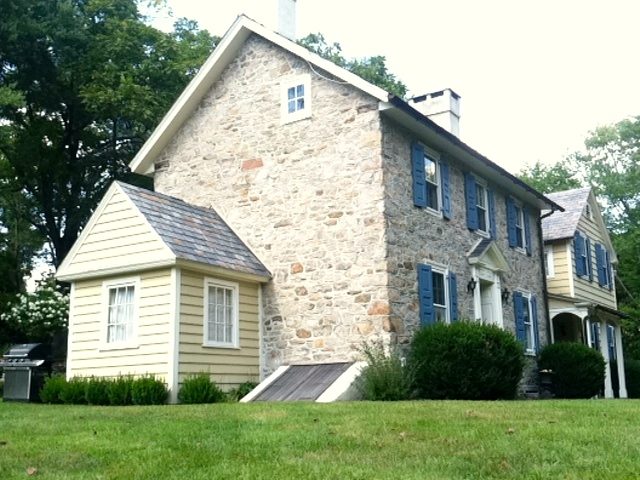
The farmhouses, barns and bank houses around Doylestown, New Hope and Solebury were built long before Portland cement was common. Their walls were laid in lime mortar: lime, sand and water. Lime mortar stays a little soft and flexible, and it is porous. Water that gets into the wall can travel out through the joints and evaporate. The wall breathes.
That breathing is how these houses have stayed standing for two hundred years. The wall gets wet, then it dries. The joints wear a little, then a mason renews them. The stone itself barely changes.
What Portland cement does to that wall
Portland cement mortar is wonderful for what it was made for: footings, foundations and modern block. On an old stone wall it causes three problems.
It is harder than the stone
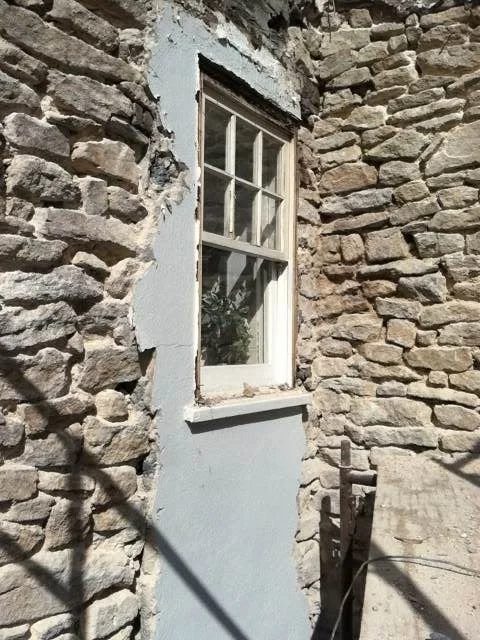
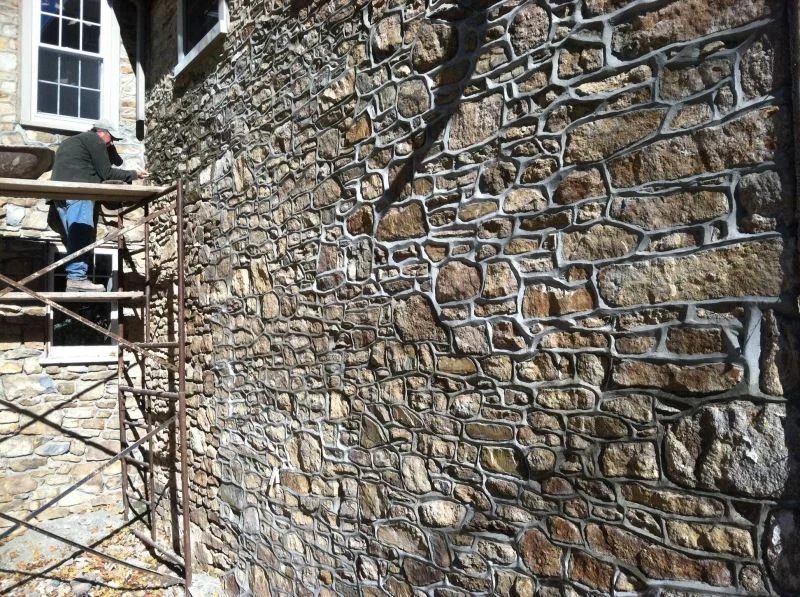
Walls move. They warm and cool, freeze and thaw, and settle. In a lime-pointed wall that movement goes into the joint. When the joint is harder than the stone, the movement goes into the stone instead. The National Park Service's repointing guidance warns that mortar stronger than the masonry causes "permanent damage to the masonry, such as cracking and spalling." We see it all the time: perfect gray joints with the faces of the stones flaking off around them.
It traps water
Dense cement does not let the wall dry through the joints. Water still gets in, through the top of the wall, around windows and from the ground, but now it can only leave through the stone. Wet stone freezes and breaks. Inside, damp walls ruin plaster and rot wood.
It cannot be undone easily
Lime pointing comes out cleanly when it is time to renew it. Hard cement is often stronger than the stone it is stuck to, so removing it means slow, careful hand work, and some stones come out with it.
The rule we follow
The rule is simple and it comes straight from preservation practice: the new mortar must be softer and more vapor-permeable than the stone around it, and it should match the original in color, texture and how the joint is finished. In practice that means a lime-based mortar mixed to suit the wall, with sand chosen to match the color and texture of what is already there.
We look at the original mortar on your house before we mix anything. The sand gives mortar most of its color and character, so matching the sand is how the new joints disappear into the old ones.
Signs your house was repointed the wrong way
- Gray, glassy-hard joints on an 18th- or 19th-century house.
- Mortar smeared wide across the faces of the stones, sometimes called "buttering" or "ribbon pointing."
- Hairline cracks running along the edges where mortar meets stone.
- Stone faces flaking, crumbling or popping off next to joints that look perfectly intact.
- Damp patches inside that started after the house was repointed.
If you recognize your house here, do not panic. It is fixable, and the sooner it is fixed the more of the original stone we can save. We will also tell you if it can wait.
Why we care so much
Luciano learned this trade at fifteen beside his father and grandfather in Italy, in villages full of lime-mortared stone walls far older than anything in Pennsylvania. Those walls are still standing because generations of masons respected how they were built. Bucks County's stone houses deserve the same respect. They are not just homes; they are some of the best stonework in America, and each one is irreplaceable.
Read more about why repointing on time protects the whole house, or see our restoration work.
Questions we hear on site
How can I tell if my house was repointed with cement?
Is lime mortar weaker?
Can bad cement pointing be removed?
Do you ever use Portland cement?
Further reading
About the authors
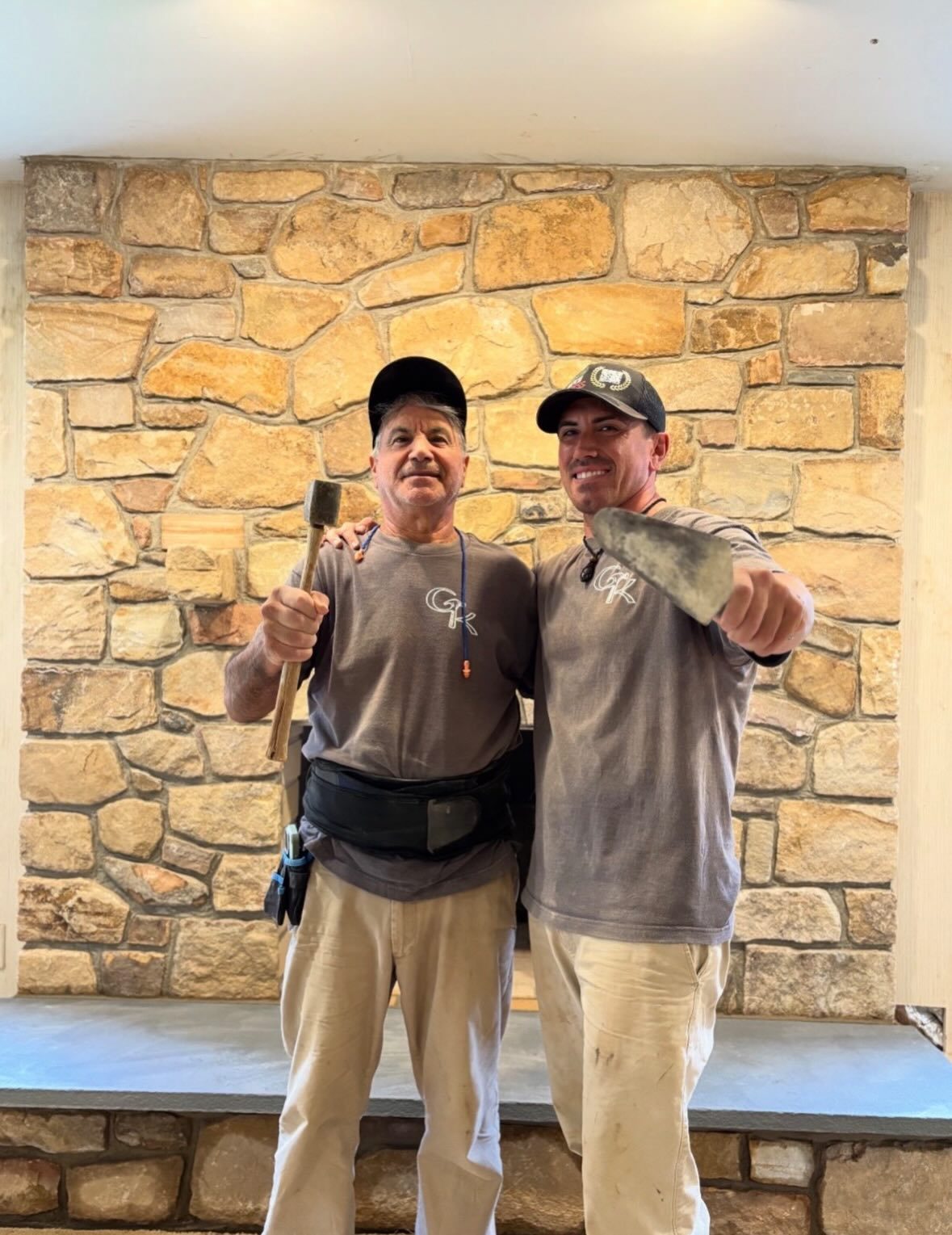
Luciano Sansalone learned stonework at fifteen beside his father and grandfather in Italy and has run American Stone LS in Bucks County for over forty years. His son Alex is the fourth generation. The two of them walk every property, draw every design and set the stone themselves. Read our story.