The short answer
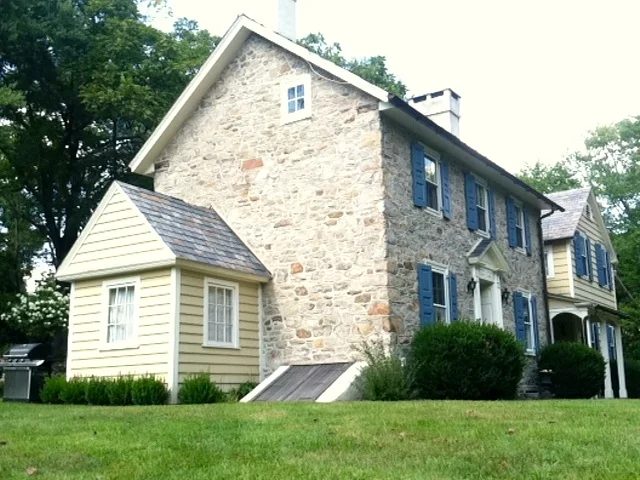
Bucks County's historic fieldstone houses were built from local stone, gathered from fields and nearby quarries, and laid in thick walls with soft lime mortar. They last for centuries if water is kept moving: keep gutters and grade working, repoint failed joints with lime mortar instead of cement, avoid sealers and cement stucco that trap moisture, and check chimneys and weather-facing walls twice a year.
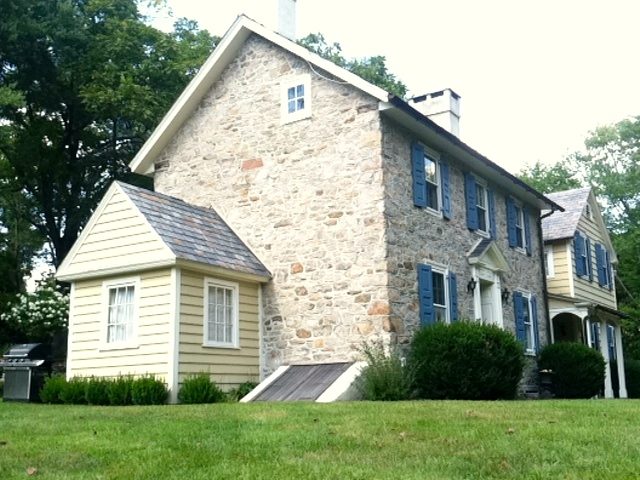
When Luciano came to America more than forty years ago, Bucks County turned out to be exactly the right place for an Italian stonemason. The countryside around Doylestown, New Hope, Solebury, Buckingham and Tinicum is full of 18th- and 19th-century fieldstone farmhouses, bank barns and springhouses, some of the finest vernacular stonework anywhere in the country. Our family has spent four decades restoring them. Here is what we have learned about keeping them healthy.
What makes these houses different
Local stone
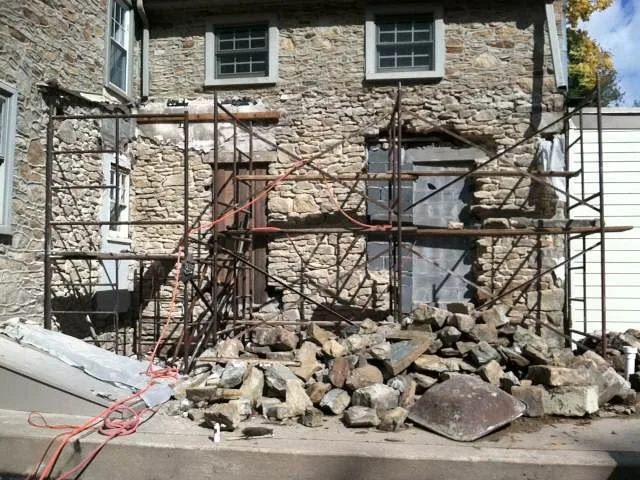
Early builders used what came out of the ground. Farmers cleared stone from their fields and quarried more nearby, so a house in one corner of the county can look quite different from one ten miles away. Much of central and upper Bucks sits on reddish-brown sandstones and shales, and in some areas you find very hard, dark diabase. When we replace a stone, we match what the original builders used.
Thick walls, soft mortar
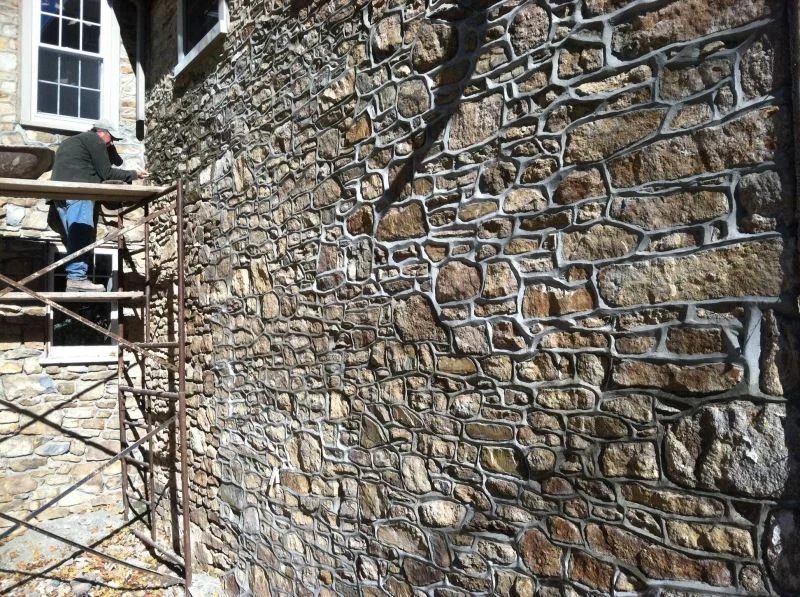
Most of these walls are two faces of stone with rubble and mortar between them, often well over a foot and a half thick. They were laid in lime mortar, which stays slightly soft and lets the wall dry out. That thickness and that mortar are why the houses have lasted, and why they need to be cared for in a particular way.
The rule of an old stone house: let it breathe
These walls were never waterproof. They get wet, and then they dry. Almost every serious problem we see comes from something that stopped them drying:
- Cement pointing that is harder and denser than the stone. Read why lime mortar matters.
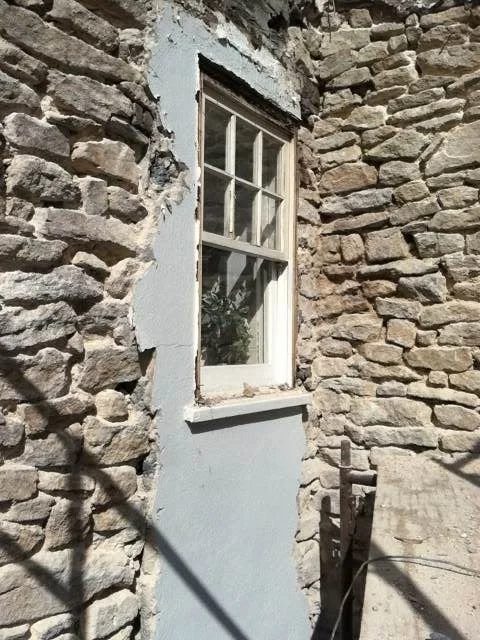
- Cement stucco over the stone, which holds water in the wall. See what to know before uncovering a stone house.
- Clear sealers and waterproof coatings painted onto the stone.
- Soil and mulch piled against the base of the wall, and grading that slopes toward the house.
A twice-a-year routine
Spring and fall, walk the house and check:
- Gutters and downspouts. Clear, attached and emptying well away from the walls.
- Grade. Soil should fall away from the house. Keep mulch and planting beds off the stone.
- Joints. Scratch a few on the weather sides. Crumbling or recessed joints are the first sign it is time to repoint. Here are seven signs to look for.
- Chimneys. Check the crown, the top courses and the flashing with binoculars.
- Openings. Look for cracked lintels, rotting sills and gaps around windows and doors.
- Vegetation. Keep ivy and vines off the walls and trees trimmed back from the roof.
- Inside. Damp spots, salt and bubbling plaster on exterior walls tell you where to look outside.
Choosing who works on it
Your house has been cared for by masons for two hundred years, and the next one to touch it should understand how it was built. Ask anyone you hire what mortar they will use and why, how they rake out joints, and to see restoration work they have done, not just new construction. Here is our full list of questions to ask.
Owning one of these houses is a privilege. We feel the same about working on them. If you own one and want an honest look at its condition, we would love to see it.
Questions we hear on site
What kind of stone are Bucks County farmhouses built from?
Should I seal my stone walls?
Why are the walls so thick?
Do you work on stone houses outside Bucks County?
Further reading

About the authors
Luciano Sansalone learned stonework at fifteen beside his father and grandfather in Italy and has run American Stone LS in Bucks County for over forty years. His son Alex is the fourth generation. The two of them walk every property, draw every design and set the stone themselves. Read our story.