The short answer
Repointing means raking out failing mortar joints to sound material, usually to a depth of two to two and a half times the joint's width, and refilling them in layers with new mortar that is softer and more breathable than the stone. Done in time, it is the single most effective thing you can do to keep a stone house dry and standing. On historic Bucks County stone, that almost always means a lime-rich mortar, not straight Portland cement.
Ask any old mason in Bucks County what keeps a stone house standing, and you will get the same answer: keep the water out. The stone itself will last for centuries. The mortar between the stones is the part designed to wear, and when it wears out, water gets in. Repointing is how you renew that defense before it costs you anything more.
What repointing protects
A fieldstone wall is thick, but it is not waterproof. When joints crack and recede, rain is driven into the wall every storm. Inside, that shows up as damp plaster, peeling paint, musty rooms and wet basements. In the wall, it means rotting lintels and joists where they sit in the stone, and stones that start to loosen. Every winter, water in those open joints freezes, expands and pushes things a little further apart.
Repointing in time stops all of that. It is a fraction of what it costs to repair water damage inside a house, or to take down and rebuild a section of stone. Read more in why repointing is the best money you will spend on a stone house.
How we repoint
1. Inspect and find the water
We walk the whole house or wall with you, look at every elevation, and check the gutters, downspouts, grading and caps. Repointing without fixing where the water comes from only buys time.
2. Rake out by hand
Failed mortar is raked out cleanly to sound material, commonly two to two and a half times as deep as the joint is wide. We do not grind joints wider or chip the edges of old stone to make the job faster.
3. Match the mortar
We match the original in strength, color, sand and texture. For historic stone that means a lime-rich mix that is softer and more breathable than the stone around it. See lime mortar vs. Portland cement for why this matters so much.
4. Pack in layers and tool the joint
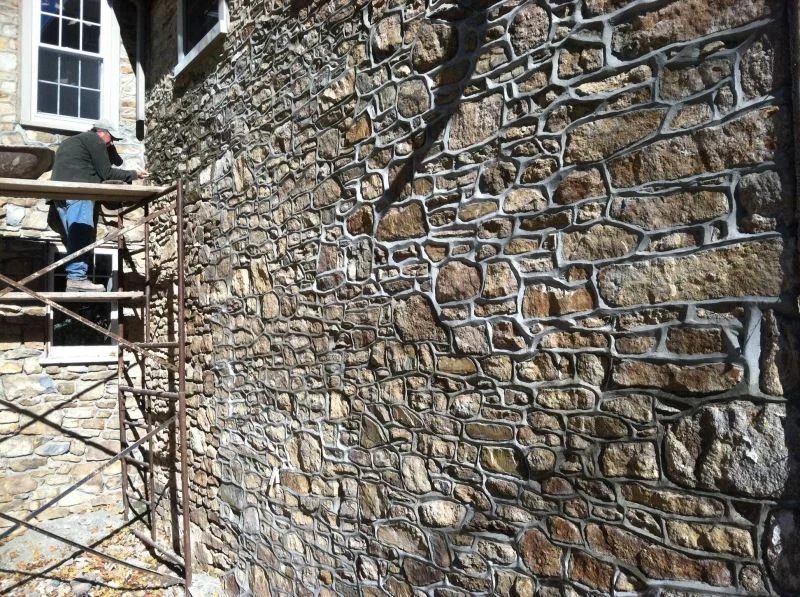
Deep joints are filled in layers, each one firm before the next, then tooled to shed water. You choose the finish: smooth concave joints that blend in, or raised convex joints that show off the stone.
5. Cure and protect
Fresh mortar is kept damp and shaded from hard sun, wind and rain while it cures. We schedule repointing for the months when it will not freeze.
Houses, chimneys, walls and patios
Most of our repointing is on 18th- and 19th-century fieldstone farmhouses and their bank barns, springhouses and outbuildings. We also repoint chimneys, foundations, retaining and garden walls, entrance pillars, historic steps and flagstone patios and walkways. When a patio or wall will take a lot of weather, we often follow repointing with a breathable sealer once the mortar has cured.
Fixing bad repointing
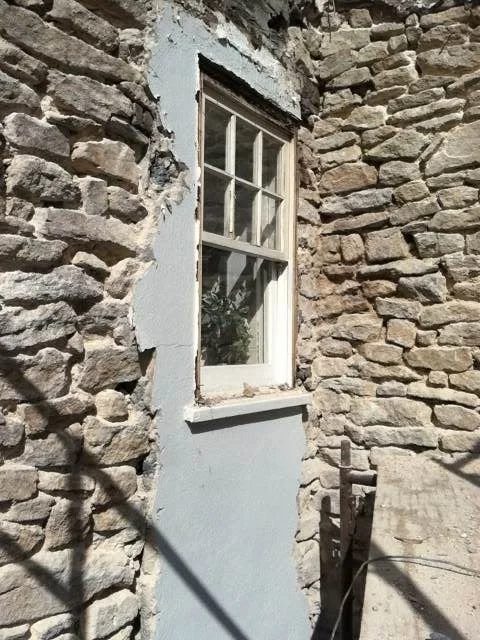
Some of our work is undoing someone else's. Hard cement smeared over old joints, wide grey joints that do not match, joints filled flush and feathered across the face of the stone. These trap water and can crack the stone around them. We cut the bad pointing out carefully and redo it the right way. Alex filmed one of these jobs: fixing another mason's work in Philadelphia.
Questions we hear on site
How do I know if my stone needs repointing?
Do you repoint the whole house or just the bad areas?
Why not use regular cement mortar?
Can you match the color of my old mortar?
How long does repointing last?
Our other restoration services
Who does the work
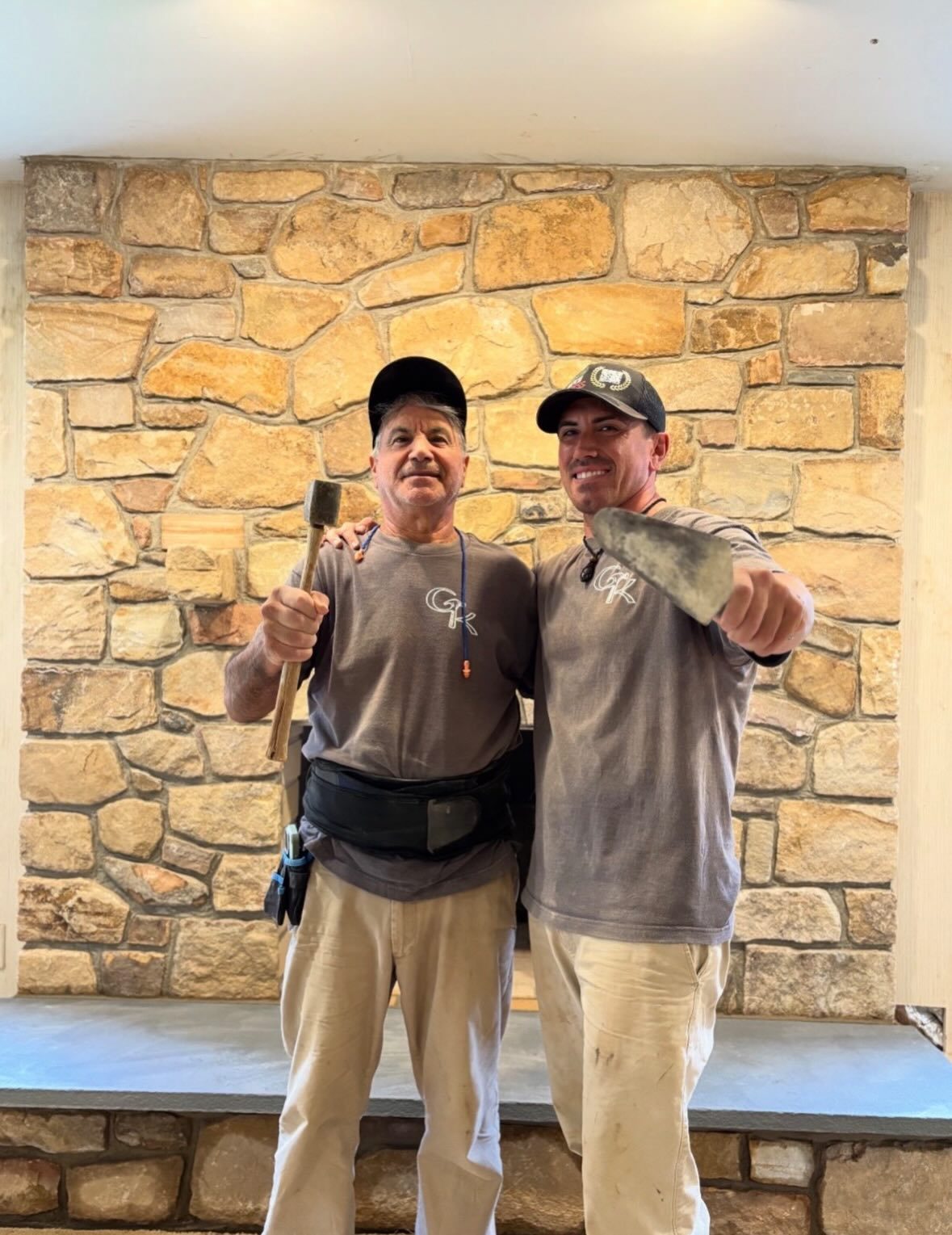
Luciano Sansalone learned stonework at fifteen beside his father and grandfather in Italy and has worked on Bucks County stone for over forty years. His son Alex is the fourth generation. The two of them inspect every property and do the work themselves. Read our story.