The short answer
Restoring a historic stone house means keeping as much original material as possible and working with how the walls were built. That means repointing with lime-rich mortar that is softer than the stone, removing hard cement and failing stucco carefully, replacing only stones that cannot be saved, and fixing the gutters, grading and drainage that let water in. Hard cement, aggressive cleaning and sealing coatings are the most common ways old stone gets damaged.
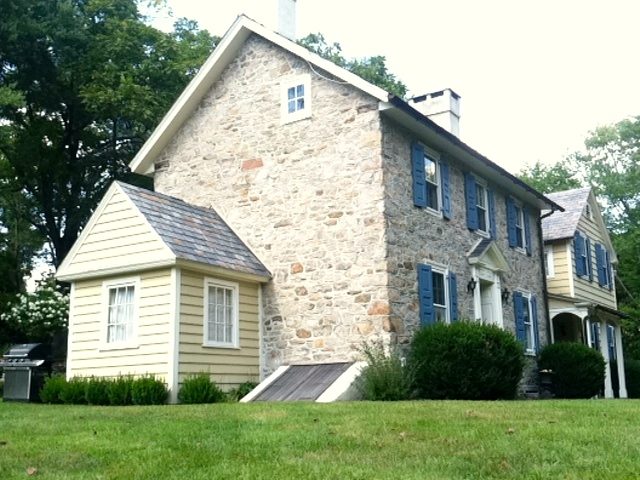
There is nothing like a Bucks County fieldstone farmhouse. Two-foot-thick walls of local stone, laid by hand more than two hundred years ago, often still standing on their original foundations. They were built to last, and they will, if the people who work on them understand how they were made.
How old stone walls work
These houses were laid in soft lime mortar. The walls get wet in the rain and dry out afterward, and the mortar joints are the softest part, so they wear first and protect the stone. The National Park Service calls mortar joints sacrificial for exactly this reason. Problems start when that balance is broken: hard cement in the joints, stucco or coatings that trap moisture, or gutters and grading that dump water against the walls. Read our guide to owning a Bucks County fieldstone house.
What a restoration includes
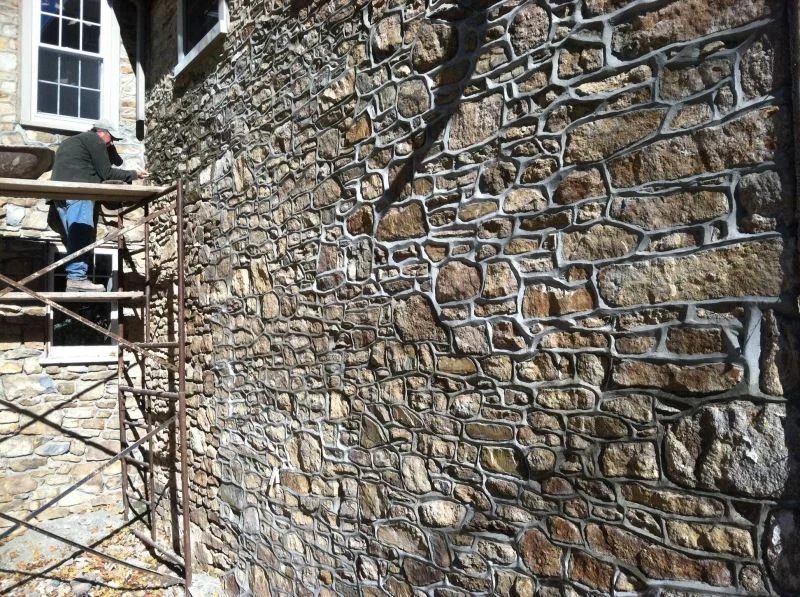
- Lime mortar repointing of failed joints, matched to the original. See stone repointing.
- Removing hard cement pointing that is damaging the stone around it.
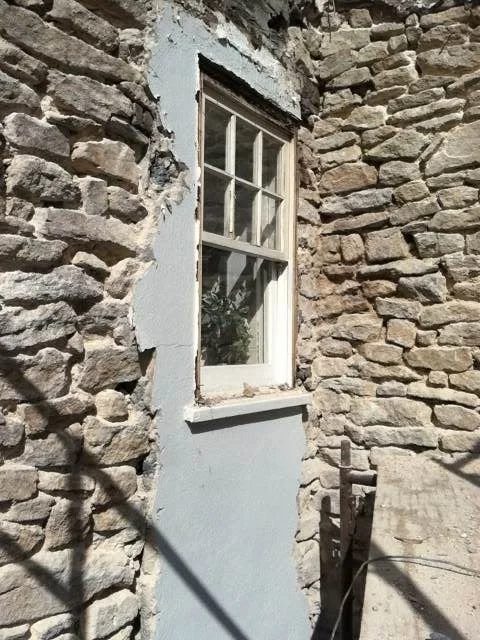
- Stucco and plaster removal to expose the original stone where it is sound.
- Stone replacement, only where a stone has failed, with matching stone.
- Chimneys, foundations, steps and window sills repointed and reset.
- Water management: gutters, downspouts and grading, so the restoration lasts.
Stucco removal
Many stone houses were stuccoed over in the 19th and 20th centuries, sometimes for style and sometimes to hide problems. Taking it off can reveal beautiful stone, but it has to be done carefully, starting with a test patch. Watch Alex's video: own an old stone house covered in plaster? Let's reveal it. Then read what to know before you uncover it.
Repair before replace
Original stone, original mortar where it is sound, original steps and sills. We keep as much as we can, because it is what makes an old house worth owning, and because maintaining stone costs far less than rebuilding it. More in restore or rebuild?
Questions we hear on site
Can you remove stucco from my stone farmhouse?
What mortar do you use on historic stone?
My house was repointed with cement. Is that a problem?
Do you work on barns and outbuildings?
Is my house in a historic district?
Our other restoration services
Who does the work
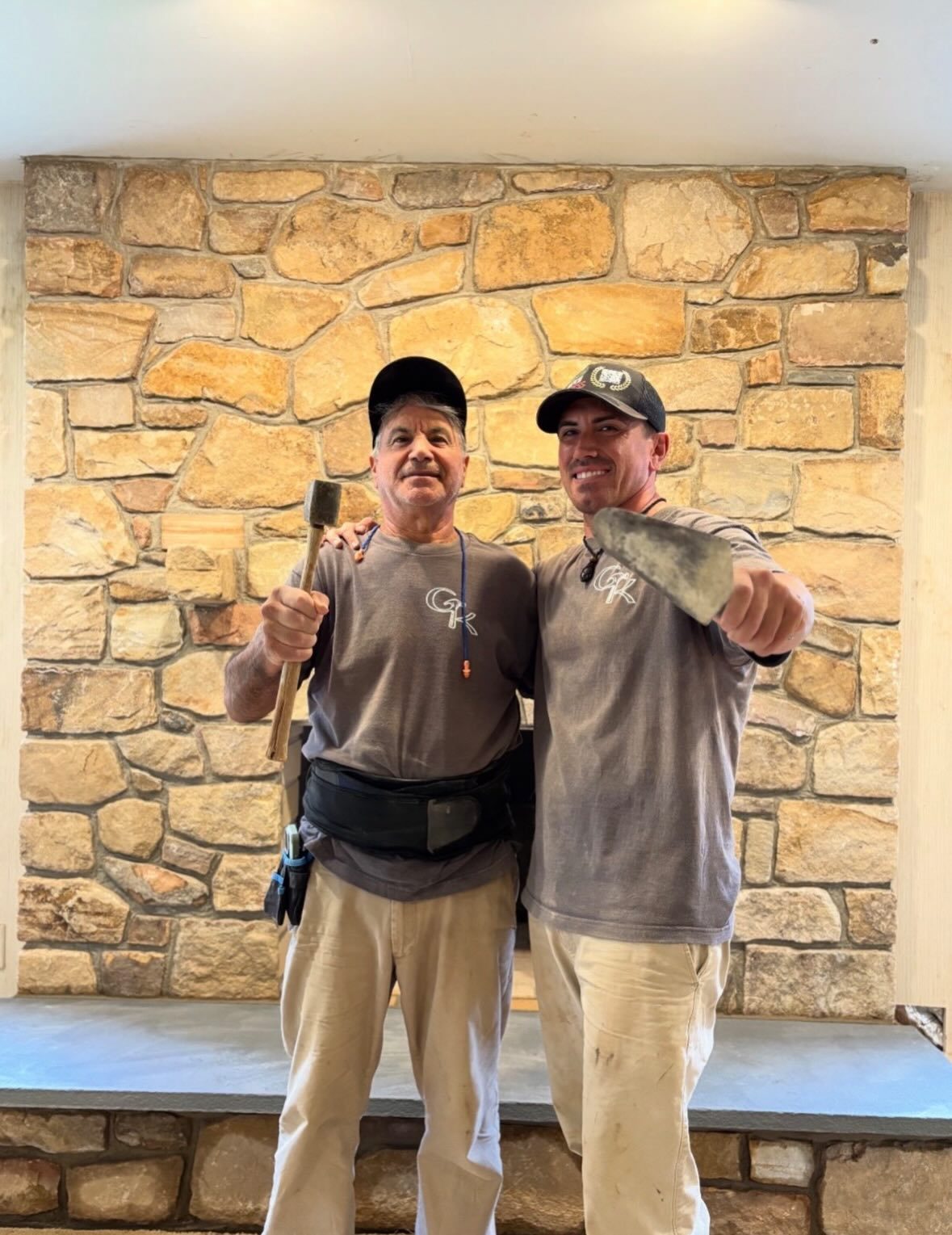
Luciano Sansalone learned stonework at fifteen beside his father and grandfather in Italy and has worked on Bucks County stone for over forty years. His son Alex is the fourth generation. The two of them inspect every property and do the work themselves. Read our story.