The short answer
Sealing natural stone outdoors makes sense for patios, walkways, steps and garden walls that take a beating from water, salt, leaves and freeze-thaw, as long as the joints are sound first and the sealer is a breathable penetrating type. It soaks into the stone and makes water bead off while still letting vapor escape. Topical, film-forming sealers can trap moisture, peel and get slippery, so we do not use them. On historic house walls, repointing and fixing where water comes from come first. A water repellent is only used there to solve a specific problem.
We love stone because it ages beautifully. But a flagstone patio by the pool, a bluestone walk that gets salted every winter, or a garden wall that sits in the sprinkler spray all take on a lot of water. Stone that stays wet stains, grows moss and algae, and suffers every time it freezes. A good sealer, applied the right way, slows all of that down.
Penetrating vs. film-forming sealers
This is the most important choice, and it is where a lot of sealing jobs go wrong.
Penetrating (impregnating) sealers: what we use
These soak into the pores of the stone and line them, so water beads up and runs off, but water vapor can still escape. The stone keeps its natural look and texture, the surface is no more slippery than before, and there is nothing on top to peel. Color-enhancing versions deepen the tone of bluestone and flagstone if you want a richer look.
Film-forming (topical) coatings: what we avoid outdoors
These sit on top of the stone like a varnish. They can look glossy for a season, but outdoors they tend to trap moisture underneath, turn cloudy, peel and get slick when wet. Once they fail, they have to be stripped before anything else can be done.
How we seal stone
1. Repair first
Sealing does not fix open joints, loose stones or a patio that drains toward the house. We repoint and reset what needs it and correct the drainage before any sealer goes on.
2. Clean gently
Dirt, moss, algae and old residue come off with the gentlest method that works. We do not blast stone or joints with high pressure, which erodes both.
3. Let it cure and dry
New mortar needs to cure, and the stone needs to be fully dry, before sealing. The sealer manufacturer's data sheet sets the waiting time, and we follow it.
4. Apply and check
Sealer goes on evenly, worked into the texture of cleft bluestone and flagstone, with the excess removed so nothing is left sitting on the surface. Then we test it with water.
Patios, walkways, steps and walls
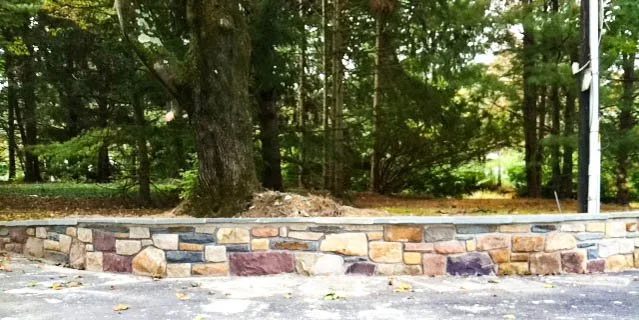
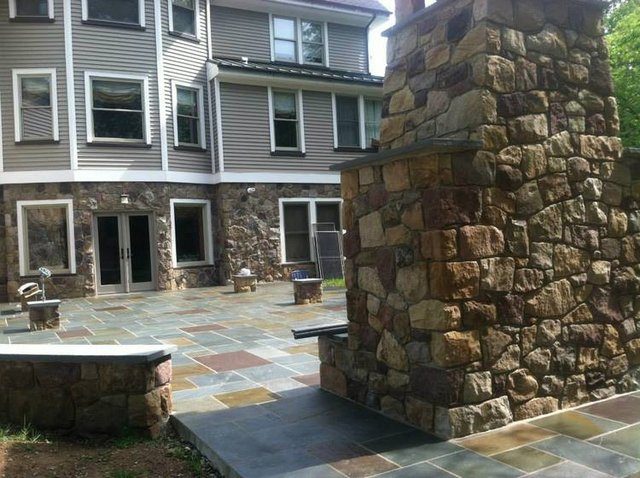
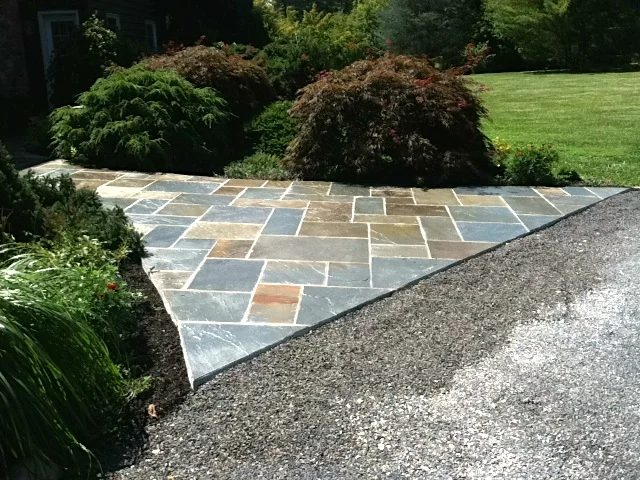
Most of our sealing is on flagstone and bluestone patios, walkways, entrance steps and pool surrounds, and on the caps and faces of retaining walls and garden walls. Read should you seal your flagstone or bluestone patio? and sealing stone walls without trapping water for the full story.
A word about historic house walls
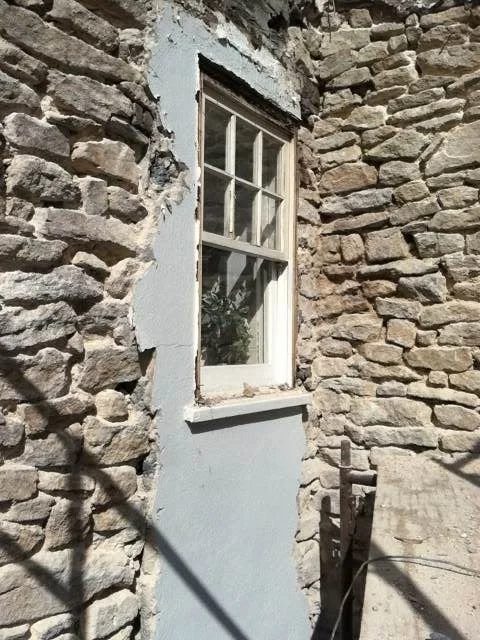
We are careful here, and we think you should be too. An 18th-century fieldstone wall was built to get wet and dry out again. Coat it with the wrong product and moisture gets trapped behind it, where it can do more damage than the rain ever did. The National Park Service's Preservation Brief 1 makes the same point. On an old house, the weatherproofing that works is sound repointing, working gutters and ground that slopes away from the walls.
Questions we hear on site
Should I seal my flagstone or bluestone patio?
How often does stone need to be resealed?
Will sealing make my patio slippery or shiny?
Can you seal over cracked or missing mortar joints?
Should I seal the stone walls of my old house?
Our other restoration services
Who does the work
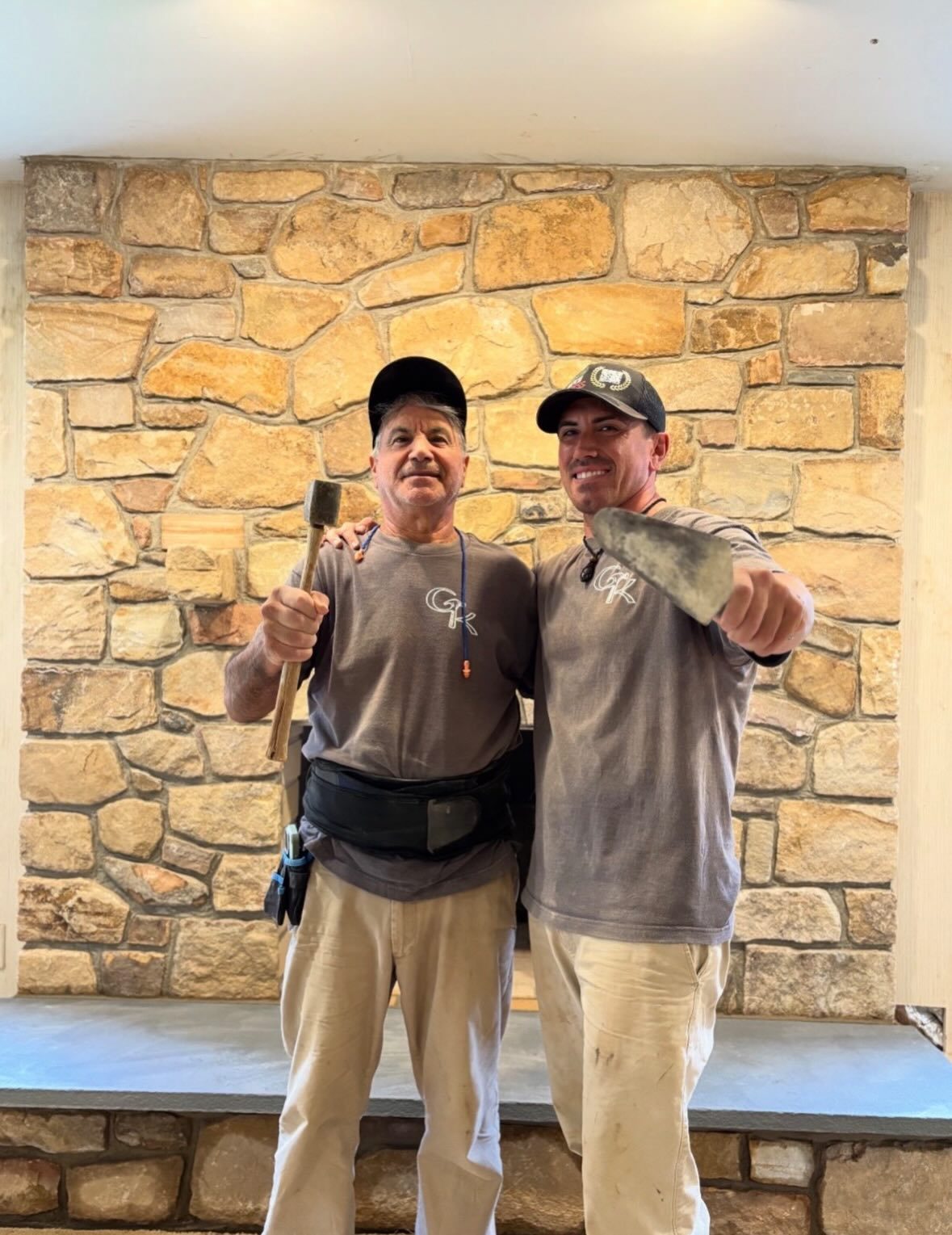
Luciano Sansalone learned stonework at fifteen beside his father and grandfather in Italy and has worked on Bucks County stone for over forty years. His son Alex is the fourth generation. The two of them inspect every property and do the work themselves. Read our story.