The short answer
Water expands when it freezes. In southeastern Pennsylvania the temperature crosses freezing many times each winter, so water in open mortar joints, porous stone and the ground under patios freezes and thaws again and again, widening cracks, lifting stones and popping off the face of soft stone. De-icing salt adds its own damage. The protection is to keep water out: sound joints, caps that shed water, drainage under patios and behind walls, gutters that work, and a breathable sealer on exposed horizontal stone.
If you want to know where stone fails, look at it in March. Winter does more damage to stonework than the other three seasons put together, and in our part of Pennsylvania it does it slowly, a little at a time, every time the thermometer crosses freezing.
How freeze-thaw works
Water expands by about nine percent when it freezes. That does not sound like much, but trapped in a crack, a joint or the pores of stone, it is enough to push things apart. Southeastern Pennsylvania does not freeze once and stay frozen. It freezes at night and thaws in the afternoon, over and over. Each cycle opens cracks a little wider, lets in a little more water, and sets up the next one.
What it does to your stone
Mortar joints
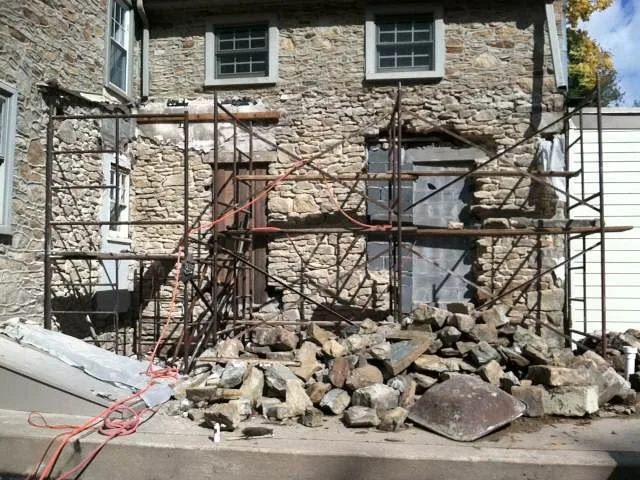
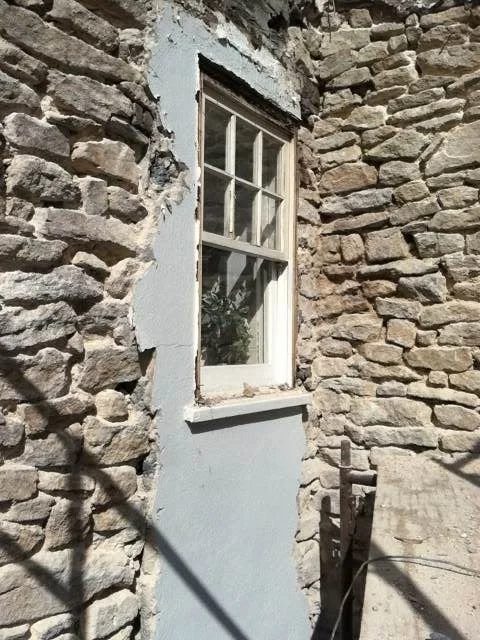
Joints are meant to be the weakest part of a wall, so they go first. Hairline cracks become open joints, mortar crumbles and washes out, and the wall starts taking in water instead of shedding it. See the signs your stone needs repointing.
Patios and walks
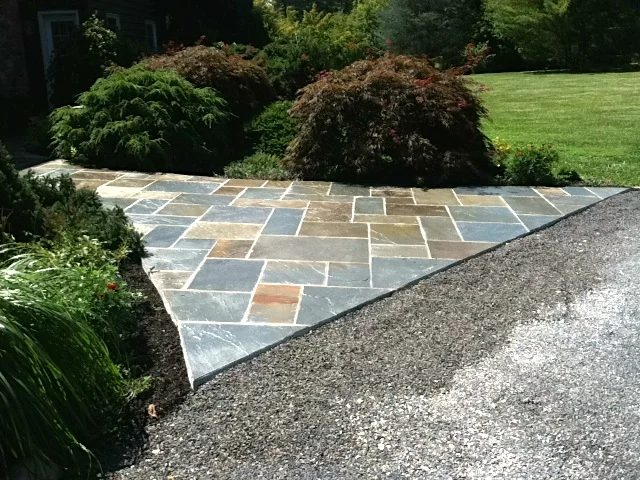
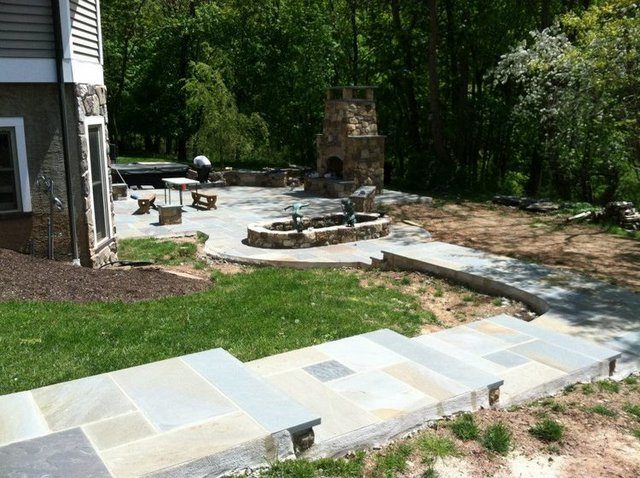
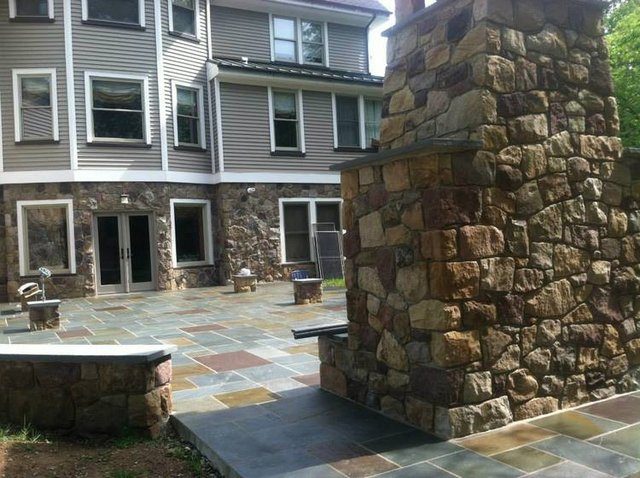
Water under a patio freezes and lifts the stones, then thaws and drops them slightly out of place. Joints break, stones rock, puddles form, and each puddle feeds more water into the base. This is frost heave, and it is why so many patios look tired by spring.
Retaining walls
Wet soil behind a wall freezes and pushes. A wall without drainage gets shoved a little further each winter until it bulges or leans.
The stone itself
Softer stones such as some sandstones can lose their face to freezing water. It is called spalling, and it is far worse when the stone is set in hard cement mortar or sealed under a coating that stops it from drying.
Salt
De-icing salt soaks into stone and mortar with the meltwater, then crystallizes as it dries, breaking down the surface from the inside. Front steps and walks show it first.
How to protect stone through winter
- Close the joints before winter. Open joints are where water gets in. Repoint in summer or early fall so the mortar is cured before the first frost.
- Use the right mortar. Mortar softer than the stone lets the wall dry and makes the joint, not the stone, take the wear. Read lime vs. Portland cement.
- Shed water from the top. Sound caps on walls and pillars, crowns on chimneys, and patios pitched away from the house.
- Drain water from below and behind. A proper base under patios, and drainage behind retaining walls.
- Keep gutters and downspouts working. Water pouring down a wall all winter will find every weak joint.
- Seal exposed horizontal stone. A breathable penetrating sealer on patios, walks, steps and caps reduces how much water and salt soak in.
- Go easy with salt and metal shovels.
After the thaw
Walk your property in spring with our stone maintenance checklist. Anything that opened up over winter is much easier and cheaper to fix in summer than after another round of freezing. Call us if you want us to take a look.
Questions we hear on site
Why is my stone flaking or peeling?
Why did my patio stones lift this winter?
Is rock salt bad for stone?
Can you repoint in winter?
Further reading
About the authors
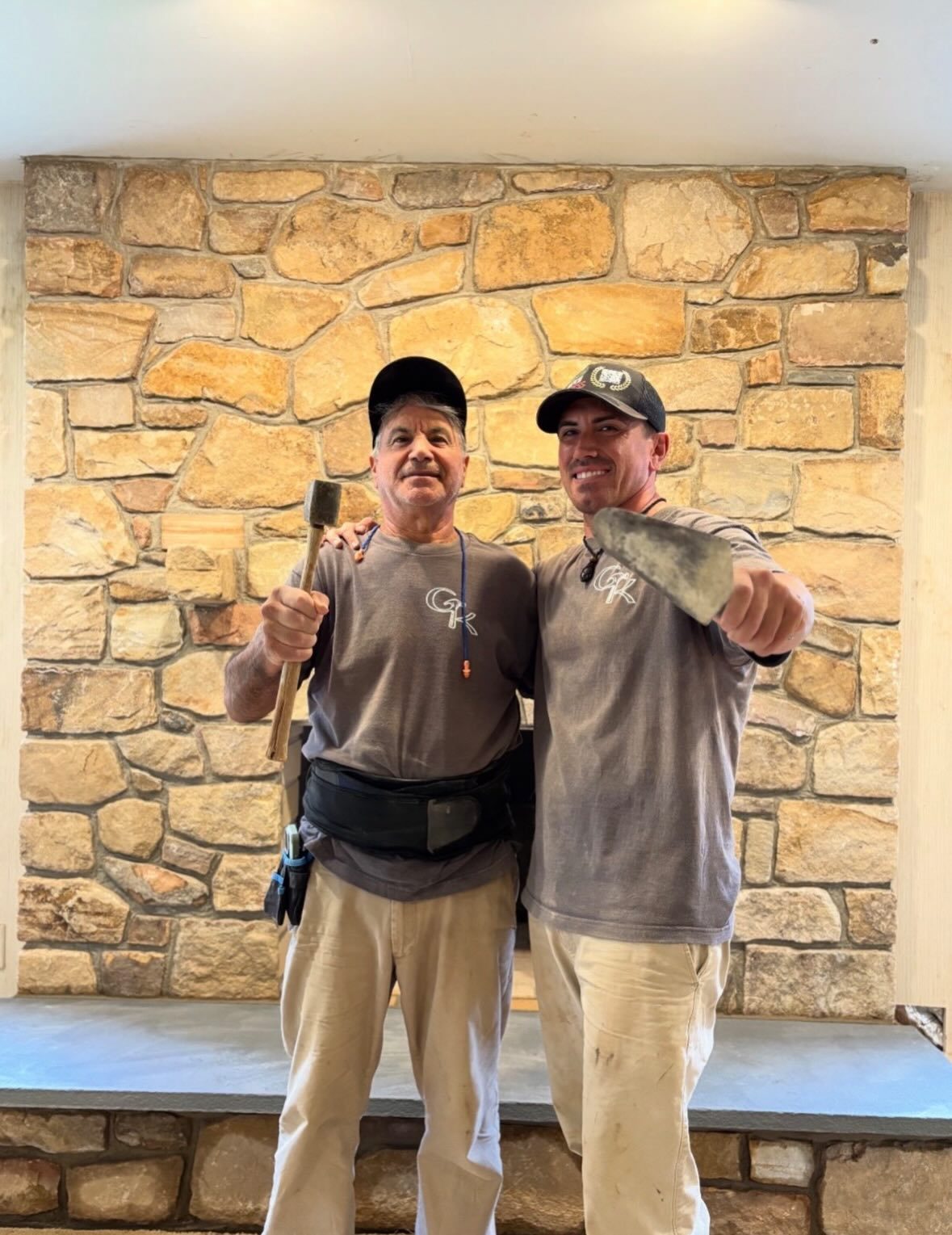
Luciano Sansalone learned stonework at fifteen beside his father and grandfather in Italy and has run American Stone LS in Bucks County for over forty years. His son Alex is the fourth generation. The two of them walk every property, draw every design and set the stone themselves. Read our story.