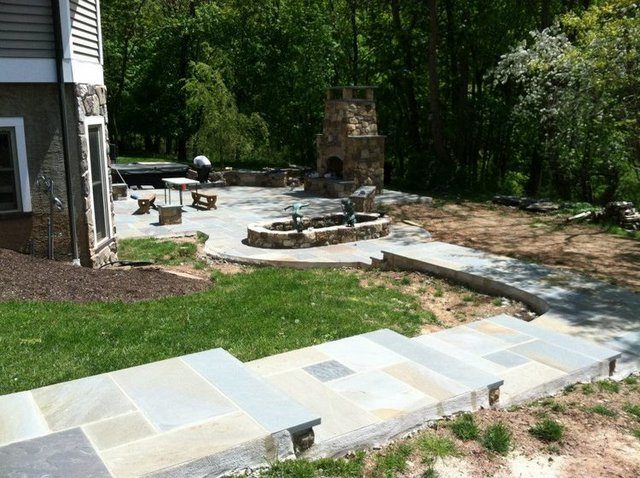
The short answer
Flagstone and bluestone patios fail when water gets under them. Open joints let rain into the base, it freezes, and stones lift, rock and crack. If the base is sound, the patio can be saved: rake out and repoint the failed joints, reset the loose stones on fresh mortar, replace the cracked ones and make sure the patio is pitched to drain away from the house. If the whole patio has sunk or heaves every winter, the base underneath needs to be rebuilt.
A good flagstone patio should outlive the house it sits beside. When one starts rocking underfoot, sprouting weeds from every joint and holding puddles after a storm, most people assume the patio is finished. Usually it is not. The stone is fine. What went wrong is underneath it.
How patios fail in freeze-thaw country
Pennsylvania winters do not freeze once and stay frozen. They freeze and thaw dozens of times. Every time water gets under a patio and freezes, it expands and lifts the stones a little. When it thaws, they settle back, a little out of place. Over a few winters:
- Mortar joints crack and wash out, letting in even more water.
- Stones begin to rock and their edges chip.
- Low spots hold puddles, which feed more water into the base.
- Thin or poorly supported stones crack in half.
It is a cycle, and the way out is to stop the water.
What we do to save a patio
1. Find out what is under it
We lift a loose stone or two to see the base. A solid concrete base or a well-compacted gravel base means the patio can almost always be restored. Topsoil, loose fill or nothing at all means the problem will keep coming back until the base is redone.
2. Rake out and repoint the joints
Failed joints get raked out cleanly to sound material, not smeared over. New mortar is packed in firmly and finished tight so water runs across the stone instead of into it. Alex filmed one of these jobs, repointing a flagstone patio, if you want to see it done.
3. Reset the loose stones
Rocking stones come up, the bed underneath is cleaned and remade, and they go back down level with their neighbors.
4. Replace the broken ones
Cracked flagstones are replaced with matching stone, cut to fit the pattern.
5. Fix the pitch and drainage
A patio must slope gently away from the house so water runs off. If yours drains toward the foundation or holds water in the middle, we correct it, and we look at downspouts that dump onto it.
6. Seal it
Once the new joints have cured and the stone is clean and fully dry, a breathable penetrating sealer helps keep water, salt and stains out, which slows the freeze-thaw cycle that caused the damage. Read should you seal your patio?
When a patio needs a new base
If the whole patio has sunk, heaves every winter or was laid straight on soil, repointing will only buy a season or two. Then the honest answer is to lift the stone, build a proper base pitched to drain, and relay it. The good news is we can usually reuse most of your original stone, which keeps the cost down and keeps the character.
On new work, we lay flagstone and bluestone on concrete bases, pitched to drain, with joints tight enough to keep water on the surface. It is more work up front and far less trouble for decades after.
Simple care that adds years
- Keep joints filled. Small gaps become big ones over one winter.
- Pull weeds from joints while they are small.
- Make sure downspouts do not empty onto the patio.
- Shovel snow with a plastic blade and go easy on rock salt, which is hard on stone and mortar.
- Clean with a brush and water, not acid or a high-pressure wand that blasts out mortar.
- Reseal when water stops beading on the stone, usually every few years.
See our patios, walkways and steps, read about restoring vs. rebuilding, or ask us to look at yours.
Questions we hear on site
Why do the joints in my flagstone patio keep cracking?
Can you repoint a flagstone patio without lifting all the stones?
Is dry-laid flagstone better than mortared?
How do I clean a bluestone patio?
Further reading
About the authors
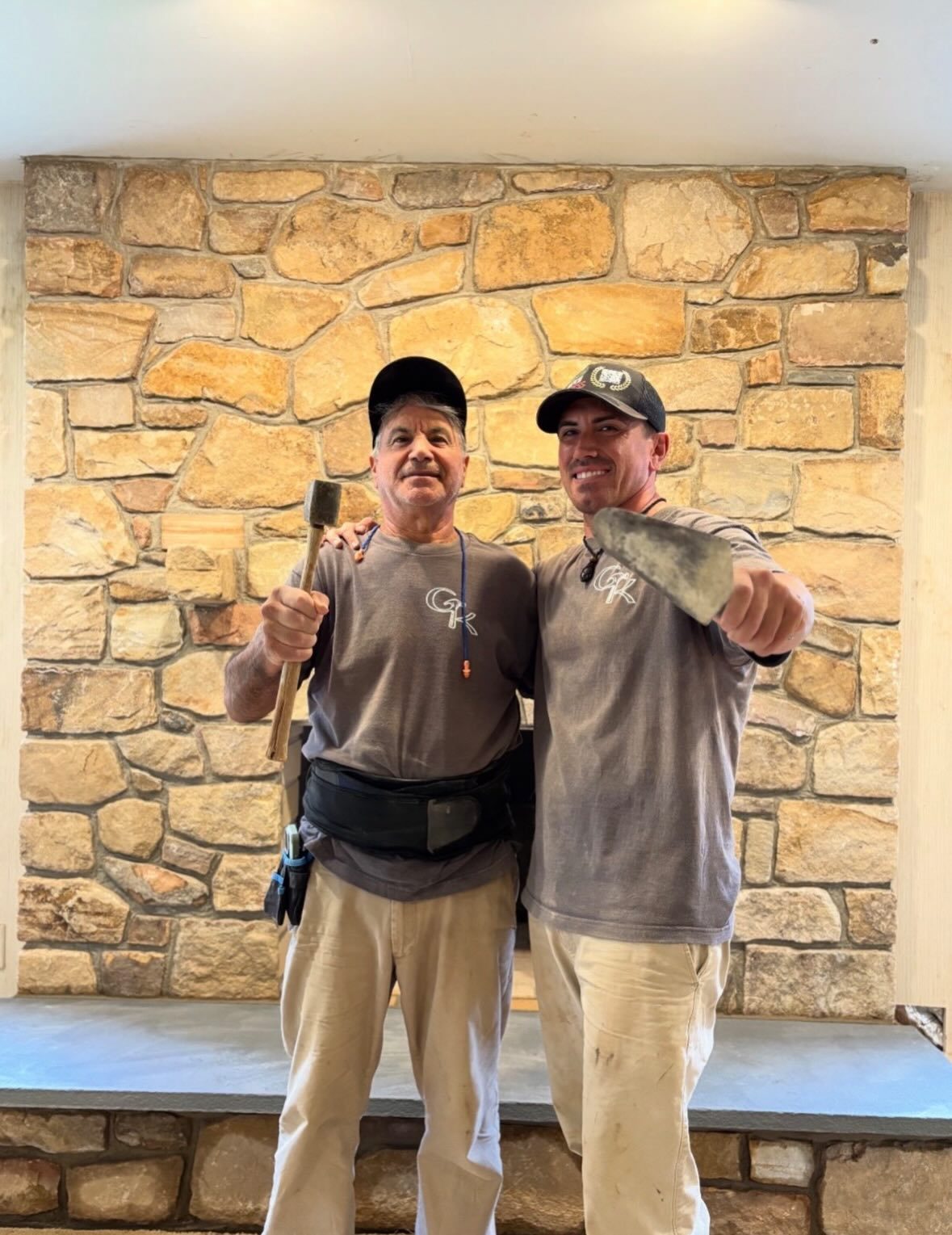
Luciano Sansalone learned stonework at fifteen beside his father and grandfather in Italy and has run American Stone LS in Bucks County for over forty years. His son Alex is the fourth generation. The two of them walk every property, draw every design and set the stone themselves. Read our story.