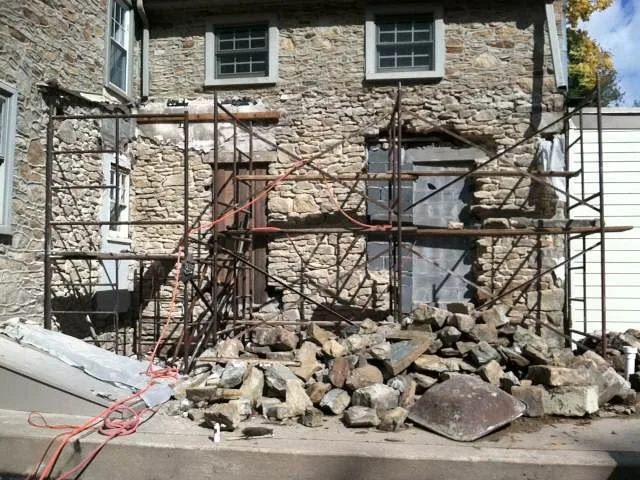
The short answer
Twice a year, in spring after the thaw and in fall before the freeze, walk around your stone house, chimney, walls, patios and walks. Look for crumbling or missing mortar, loose stones, cracks, white salt stains, green growth and puddles. Keep gutters clean and downspouts carrying water away, keep soil and mulch off the stone, pull weeds from joints, and go easy on rock salt. Have a mason repoint small failures as they appear and reseal patios when water stops beading. A little every year costs far less than a big repair every twenty.
Stone is the most durable building material there is. A fieldstone house in Bucks County can stand for three hundred years. But durable is not the same as maintenance-free. The stone lasts because someone keeps the water out of it, and that mostly comes down to small, regular jobs. Here is the list we would give our own family.
Spring: after the thaw
Winter is when the damage happens, and spring is when you can see it.
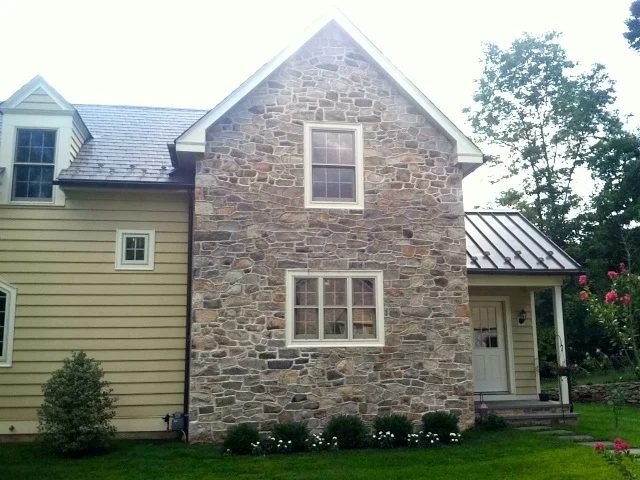
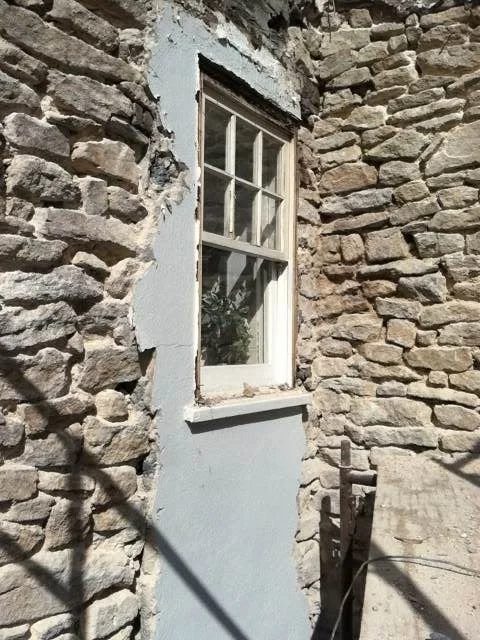
- Walk all four sides of the house. Look for mortar that is crumbling, cracked or recessed well back from the stone face, especially on the side that takes the weather.
- Look up at the chimney. Binoculars help. Missing mortar near the top, a cracked crown or a leaning cap are early warning signs.
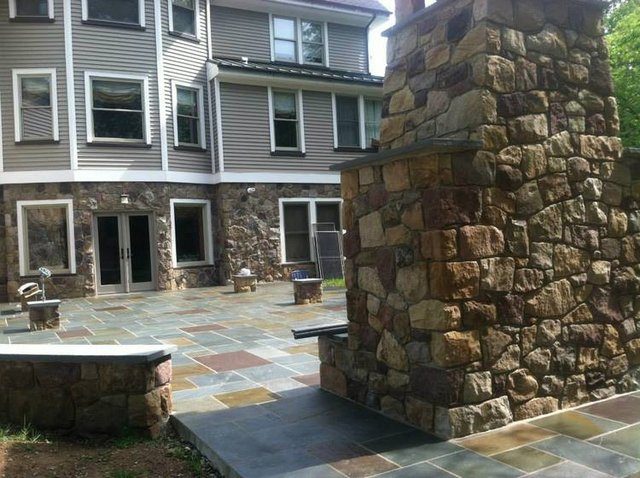
- Check patios, walks and steps. Stones that rock, joints that opened over winter, new cracks, and spots where puddles sit.
- Check walls. Any new bulge or lean in a retaining wall, loose cap stones, or soil washing out at the base.
- Clean up salt. Rinse de-icing salt off steps and walks with plain water.
- Look inside. Damp patches, peeling paint or plaster, and musty corners on stone walls point to water getting in.
Summer: the best time for repairs
- Schedule repointing. Mortar needs to cure without freezing, so late spring through early fall is repointing season. Book early, because good masons fill up.
- Pull weeds from joints while they are small, before roots widen the cracks.
- Trim plants back from walls. Ivy and shrubs against stone keep it damp, and roots get into joints.
- Test your sealer. Sprinkle water on patios and walks. If it soaks in instead of beading, plan to reseal once any repairs have cured.
Fall: before the freeze
- Clean the gutters after the leaves drop. Overflowing gutters pour water down stone walls all winter.
- Check the downspouts discharge well away from the foundation, not onto a patio or against the house.
- Pull back soil and mulch so it does not touch the stone. The ground should slope away from the walls.
- Fill small joint gaps on patios and walks before winter turns them into big ones.
- Clear leaves off patios and wall caps, where they hold water and stain.
Winter: go easy on the stone
- Shovel with a plastic blade on flagstone and bluestone. Metal edges chip stone and gouge joints.
- Use as little rock salt as you can. Salt is hard on both mortar and stone. Sand gives grip without the damage.
- Do not pile snow against the house or on top of wall caps.
- Watch for ice dams and icicles on stone walls. They mean water is running where it should not.
Every few years
- Have a mason inspect the house, chimney, walls and patios up close.
- Repoint small areas as they fail, instead of waiting for the whole wall.
- Reseal patios, walks and wall caps when the water test says so.
Why it is worth it
Every big stone repair we do started as a small one someone did not notice. A few open joints become a wet wall, a wet wall becomes damaged plaster and rotted wood, and a heaving patio becomes a full rebuild. Read why maintaining stone costs far less than rebuilding it, and if you want a second set of eyes, our inspection and estimate are free.
Questions we hear on site
How often should a stone house be inspected?
Can I repoint small areas myself?
Is power washing safe for stone?
What is the white powder on my stone?
Further reading
About the authors
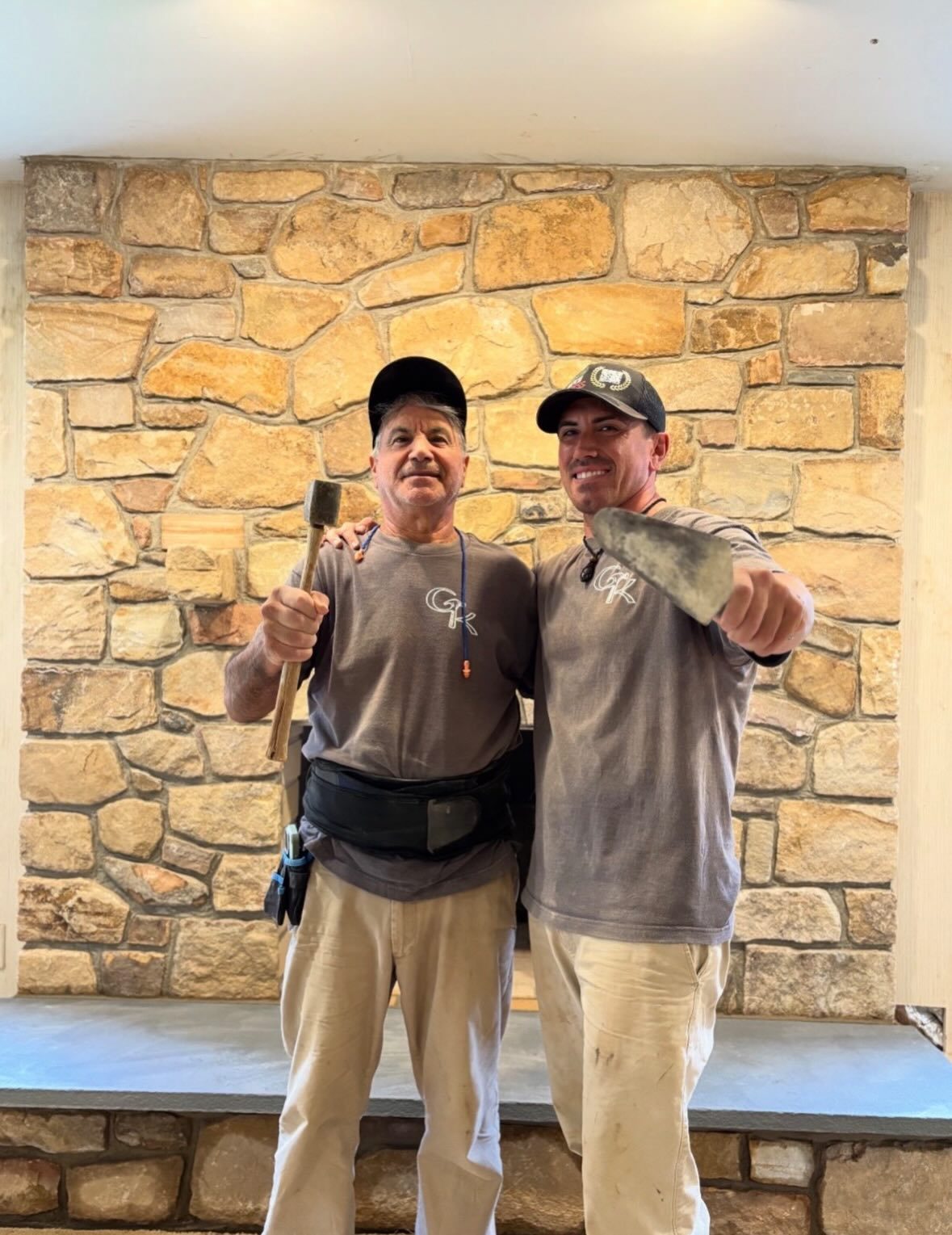
Luciano Sansalone learned stonework at fifteen beside his father and grandfather in Italy and has run American Stone LS in Bucks County for over forty years. His son Alex is the fourth generation. The two of them walk every property, draw every design and set the stone themselves. Read our story.