The short answer
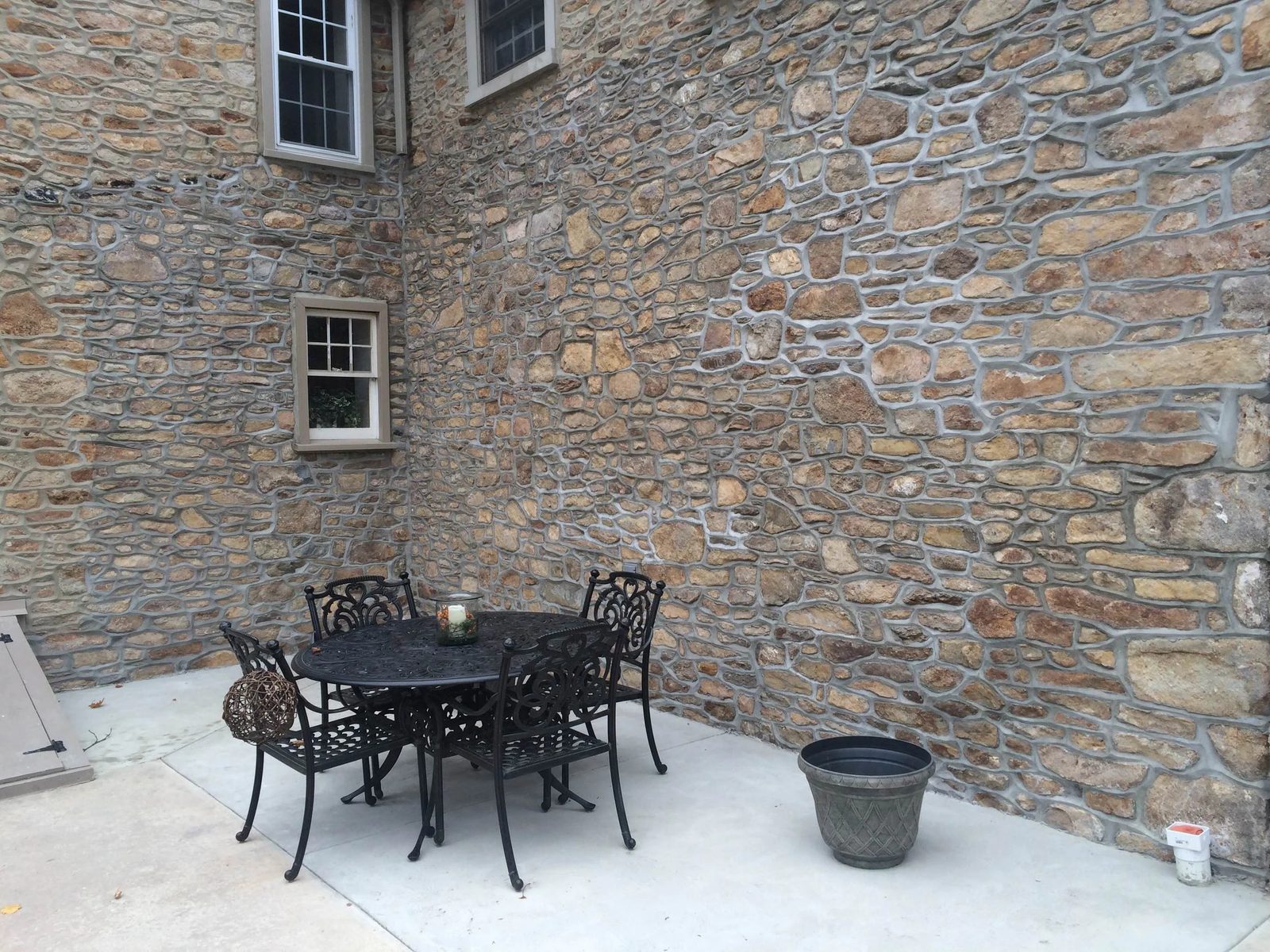
Your stone house likely needs repointing if mortar crumbles out when you scratch it, joints are recessed or open, stones are loose, plants grow from the wall, white salt stains appear, or plaster and paint on the inside of exterior walls are bubbling or damp. Chimneys and weather-facing walls usually go first. Catching it at this stage keeps the job to repointing instead of rebuilding.
Stone houses talk, if you know what to listen for. They do not fail overnight. They give you years of small signs first. Here is the checklist we run through on every walk-around, in roughly the order a homeowner can spot them.
1. Mortar that crumbles when you scratch it
Take a key or a flat screwdriver and drag it along a few joints at chest height on the weather side of the house. Sound mortar scratches. Spent mortar pours out like sand. If you can dig more than a little way in with no effort, the joint has stopped protecting the wall.
2. Joints sitting deep behind the face of the stone
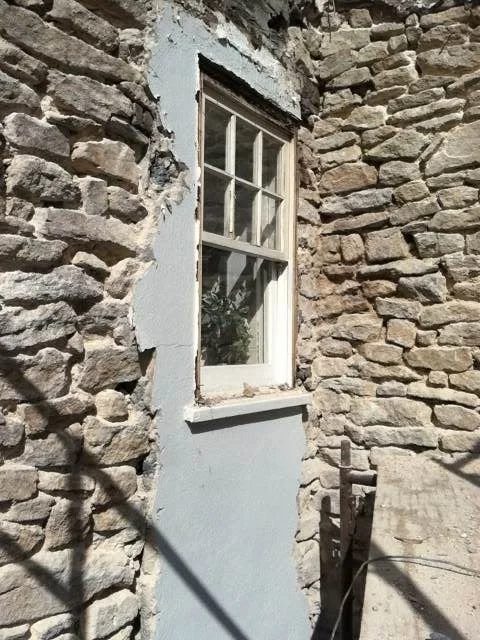
When mortar has washed out, the joints look recessed and shadowed, and the stones stand proud like teeth. Water sits on every one of those little ledges and soaks in. This is the most common sign we see and the one most often ignored.
3. Gaps, holes and loose stones
Open holes you can push a finger into, small stones that wiggle, and stones that have already dropped out. Each hole is a direct path for water into the core of the wall, and each loose stone makes the ones around it work harder.
4. Plants, moss and roots growing from the wall
A little moss is charming. Weeds, saplings and vines rooted in the joints are not. Roots only grow where there is soil and water inside the wall, and as they grow they pry stones apart. Cut them at the base and let us look at what they have done to the joint behind them.
5. White salt stains (efflorescence)
White, powdery or crusty deposits on the stone mean water is moving through the wall and leaving salts behind as it dries. On its own it is not dangerous, but it tells you where water is getting in.
6. Damp, bubbling or stained plaster inside
On farmhouses where plaster is applied straight to the inside face of the stone, the inside of the house is often where failing joints show first. Bubbling paint, crumbling plaster, salt bloom and a musty smell on an exterior wall all point outside. The National Park Service lists "damp walls, or damaged plasterwork" right alongside disintegrating mortar as signs that repointing may be needed.
7. A chimney that looks tired
Chimneys stand in the worst weather on the house, wet on every side and frozen hard every winter. Look at yours with binoculars: open joints near the top, a cracked crown, missing stones or any lean. Chimneys are where small problems become expensive fastest.
Before you call anyone: rule out the water source
Repointing fixes failed joints. It does not fix a gutter that overflows onto one corner of the house every storm, or soil that slopes toward the foundation. The Park Service guidance makes the same point: find and fix the cause of the moisture first, or new mortar will fail for the same reason the old mortar did. When we walk a property we look up at the roof and down at the grade before we ever look at the joints.
What to do next
If you have checked two or three of these boxes, it is time for a mason to look. Please do not let anyone talk you into smearing cement over the old joints. Read why the wrong mortar destroys old stone before anyone touches your walls.
And if you would like a straight answer, call us for a free walk-around. Some houses need work now. Some need it in five years. Some just need the gutters cleaned. We will tell you which.
Questions we hear on site
Does the whole house need repointing at once?
What is the white powder on my stone walls?
What time of year is best for repointing?
Is hairline cracking in the joints a problem?
Further reading
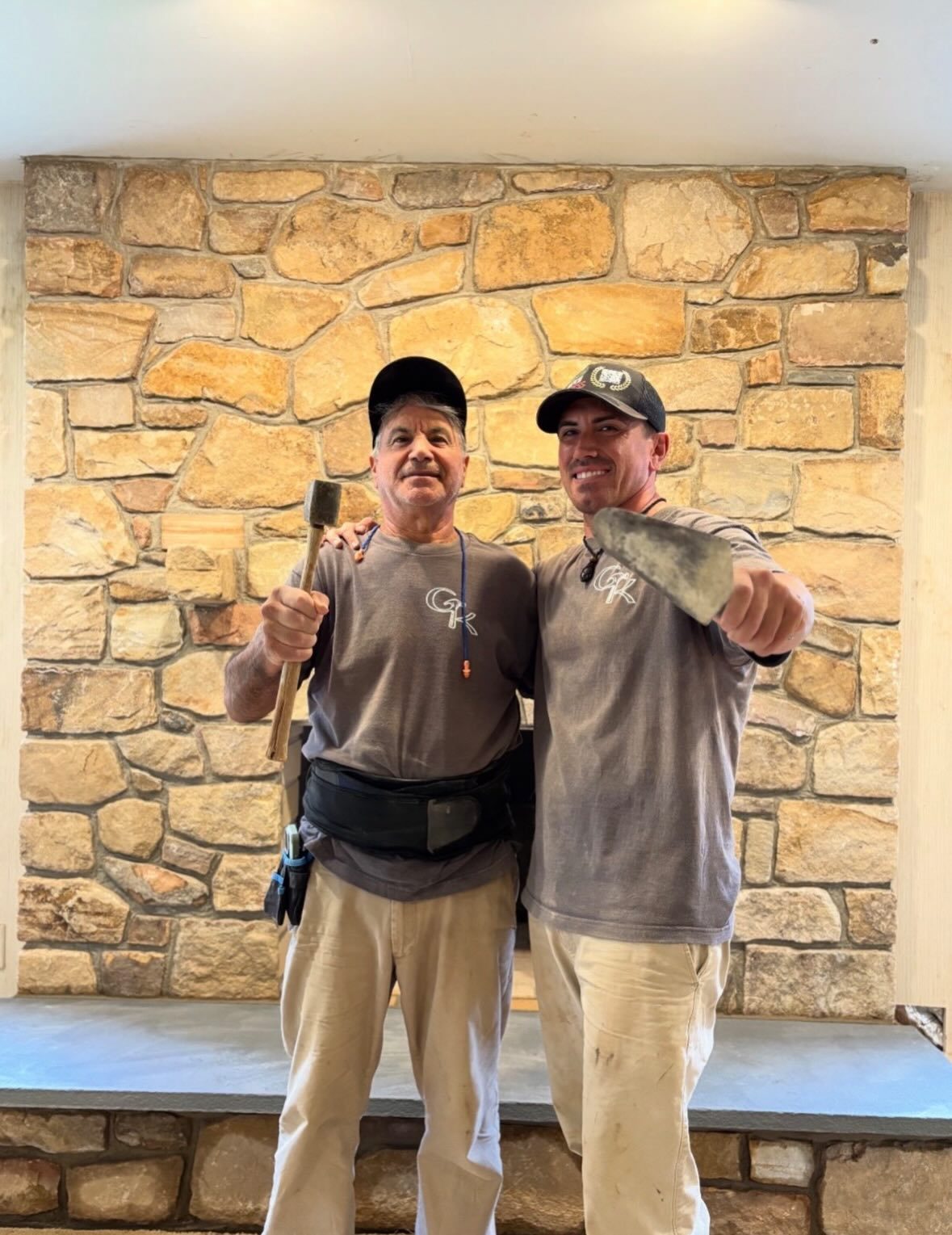
About the authors
Luciano Sansalone learned stonework at fifteen beside his father and grandfather in Italy and has run American Stone LS in Bucks County for over forty years. His son Alex is the fourth generation. The two of them walk every property, draw every design and set the stone themselves. Read our story.