The short answer
Chimneys are the most exposed masonry on a house. They take rain, wind and freeze-thaw from every side, and hot flue gases from the inside, so their mortar fails first. Warning signs include missing or recessed joints near the top, a cracked crown, loose stones or bricks, white staining, and water stains on ceilings or walls near the chimney. Repointing the failed joints and repairing the crown and cap early keeps water out of the chimney and the house, and avoids taking the top of the chimney down and rebuilding it.
When we walk up to a stone house for the first time, we look at the chimney before anything else. It almost always tells us how the rest of the masonry is doing, because chimneys are where water and weather hit hardest.
Why chimneys fail first
- They are exposed on every side. A wall has one face to the weather. A chimney above the roofline has four, plus the top.
- They take the most wind-driven rain, high up where nothing shelters them.
- They freeze and thaw harder, standing in the open with cold air all around.
- They get hot from the inside. A working chimney heats and cools with every fire, which works the joints and draws moisture through the masonry.
- They are hard to see, so problems go unnoticed until water shows up inside.
Warning signs
Grab a pair of binoculars and look for:
- Joints near the top that look like dark gaps instead of solid mortar.
- A cracked, crumbling or missing crown around the flue.
- Stones or bricks out of line, or pieces on the roof or in the gutter.
- White salt staining or dark streaks running down the chimney.
- Plants or moss growing out of joints.
- Inside: water stains on the ceiling or walls around the chimney, or damp in the fireplace.
What chimney repair involves
Repointing
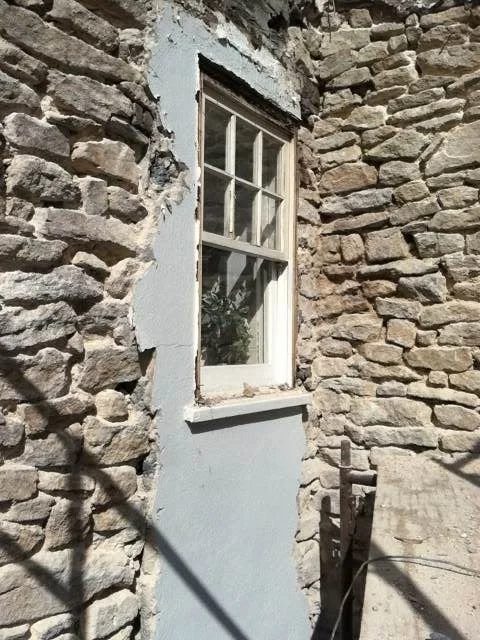
Failed joints are raked out by hand to sound mortar and repointed with a mortar matched to the chimney's stone or brick and no harder than it. Same method as repointing a wall, done up on a roof with careful staging.
Crown and cap
A cracked crown is repaired or rebuilt so it slopes water away and overhangs the face of the chimney. A flue cap keeps rain and animals out of the flue.
Flashing
Where the chimney meets the roof, failed flashing lets water run down into the house. We check it and coordinate with your roofer when it needs replacing.
Rebuilding the top
When joints have failed for too long, the top courses loosen and the chimney may lean. Then the upper section comes down to sound masonry and is rebuilt with the original stone. That is exactly what early repointing avoids.
Do not wait for the leak
By the time a chimney leak shows on your ceiling, water has usually been in the masonry for a while. A chimney that needs a few joints repointed this summer can need a rebuild a few winters later. See our historic restoration work, read why repointing prevents water damage, or ask us to look at your chimney.
Questions we hear on site
How can I tell if my chimney needs repointing from the ground?
What is a chimney crown?
Do I also need a chimney sweep?
Can a leaning chimney be repointed?
Further reading
About the authors
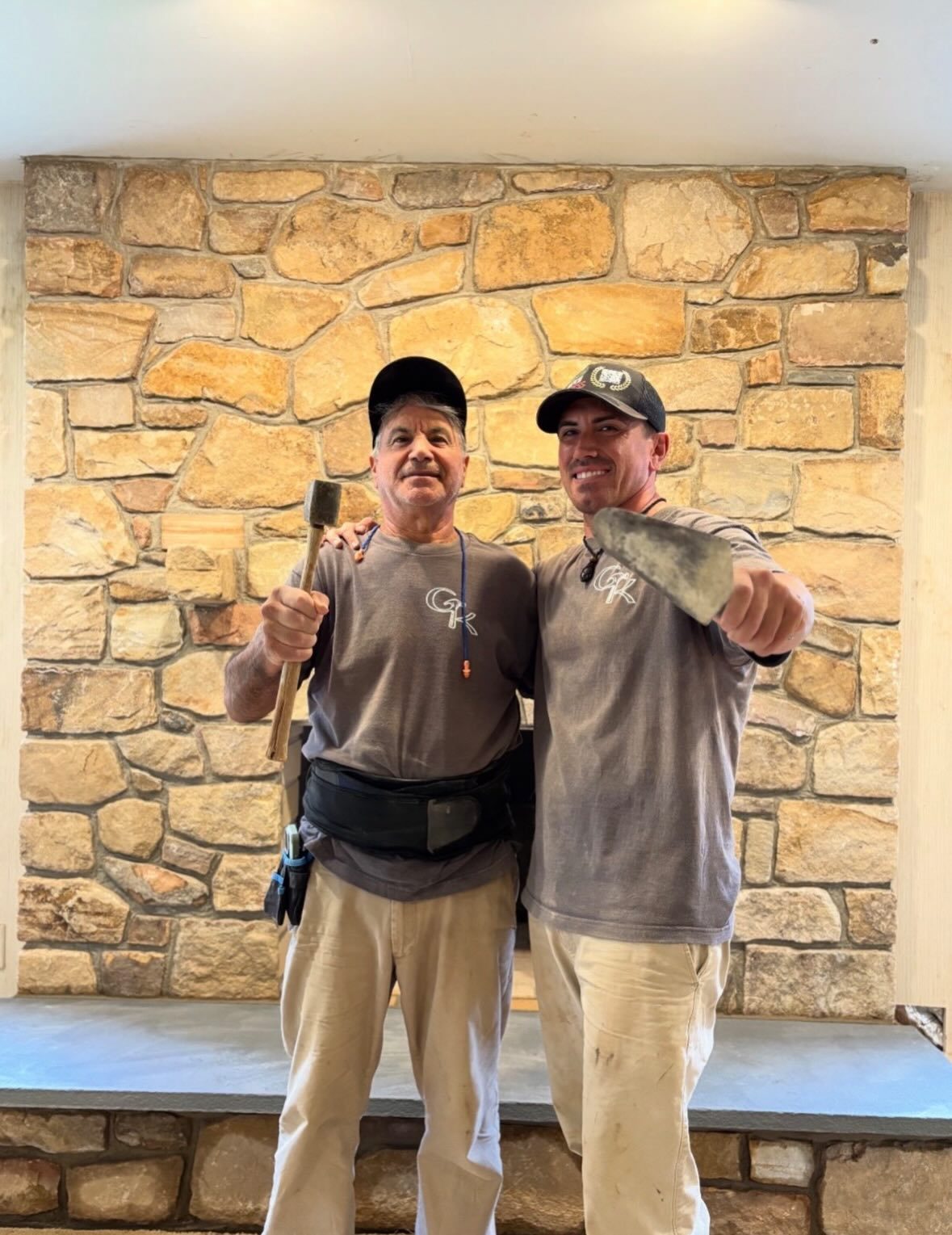
Luciano Sansalone learned stonework at fifteen beside his father and grandfather in Italy and has run American Stone LS in Bucks County for over forty years. His son Alex is the fourth generation. The two of them walk every property, draw every design and set the stone themselves. Read our story.