The short answer
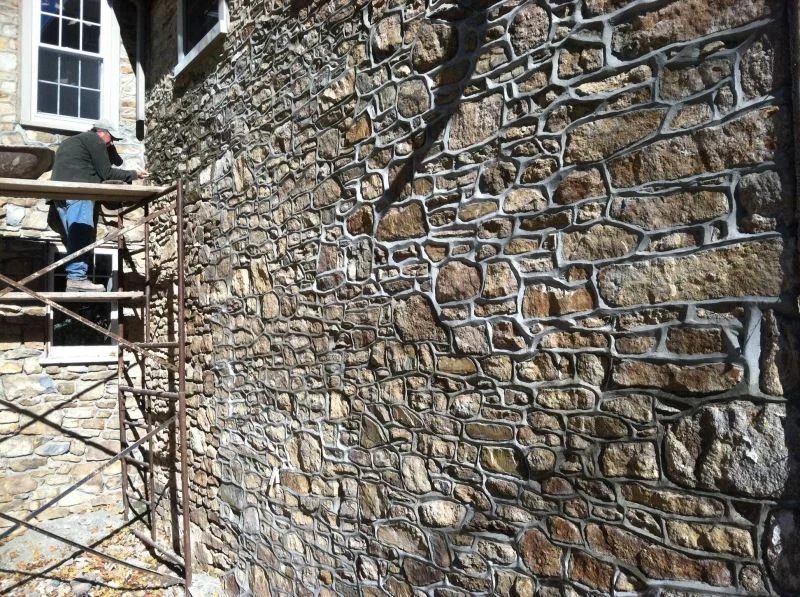
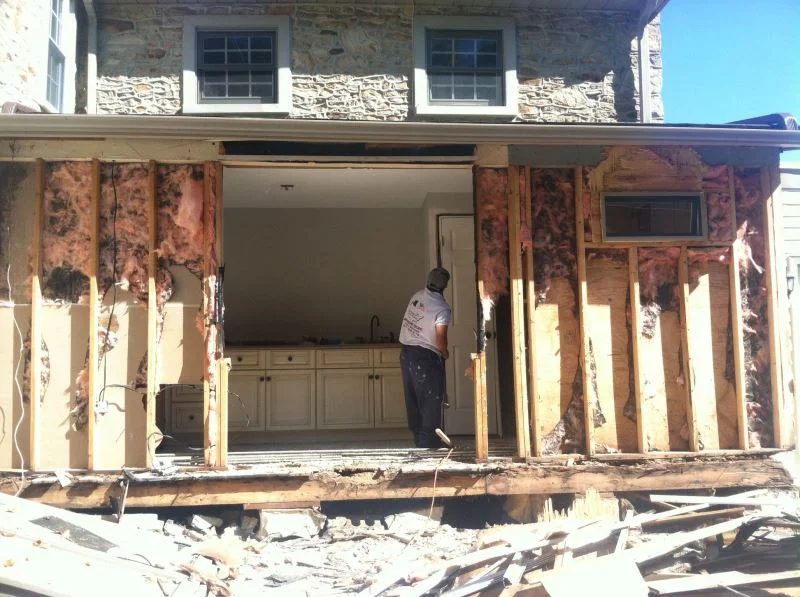
The mortar between your stones is the part of the wall built to wear out first. When joints crack and wash out, rain runs straight into the wall, soaks the inside face, ruins plaster, rots sills and joists and freezes inside the stone each winter. Repointing replaces that worn mortar before the damage reaches the house itself, and it costs a small fraction of the interior and structural repairs it prevents.
Every stone house in Bucks County is really two materials working together: stone that will outlive all of us, and mortar that was always meant to be renewed. Our family has repointed walls for four generations, and the story is almost always the same. The stone is fine. The joints gave up. And by the time someone calls us, the water has already found its way inside.
The mortar is supposed to wear out first
This surprises a lot of homeowners. In a well-built stone wall the mortar is softer than the stone on purpose. It takes the movement, the frost and the weather so the stone does not have to. The National Park Service, in its guidance on repointing historic masonry, describes mortar joints as "intended to be sacrificial." They are the part of the wall that gets replaced so the rest of it can last for centuries.
So when you see joints cracking, sanding out or falling away in pieces, the wall is not failing. It is doing its job and telling you it is time.
What happens when you wait
An open joint is a gutter pointed straight into your house. Here is the order we usually see the damage come in:
- Water gets behind the face of the wall. Rain runs down the stone and into every gap. Old fieldstone walls are thick, but they are not waterproof, and a wet wall stays wet for a long time.
- The inside face shows it. Plaster bubbles, paint peels, you see white salt on the walls, and the room smells damp. In a farmhouse with plaster applied straight to the stone, this is often the first sign.
- Wood starts to rot. Window sills, door frames and the ends of floor joists that sit in the stone wall stay damp, and damp wood rots.
- Winter does the rest. Water that freezes inside the joints expands, pushes stones apart and loosens them. Every freeze-thaw cycle opens the joints a little wider, and a Pennsylvania winter has a lot of them.
- Stones come loose. Eventually a corner bellies out, a section of chimney leans, or a stone drops. Now you are paying for rebuilding, not repointing.
Each step costs more than the one before it. Repointing at step one is maintenance. Repairs at step five are construction.
What a proper repointing job looks like
Repointing is simple to describe and slow to do well. That is exactly why it gets done badly so often.
1. Rake the joints out by hand
We cut the failing mortar out to sound material, roughly two to two and a half times as deep as the joint is wide, which is the depth the Park Service guidance recommends. On old stone we do this with hand tools. Grinders in a hurry chip the edges of the stone and widen the joints, and that damage is permanent.
2. Use the right mortar for the wall
This is where most bad jobs go wrong. An old fieldstone house was built with lime mortar, and it needs lime mortar back. Hard Portland cement mortar looks fine for a few years, then cracks along the edges, traps water inside the wall and forces the stone to take the stress instead. We wrote a whole article on this: why the wrong mortar destroys old stone.
3. Pack it in layers
Deep joints get filled in layers, each one firmed up before the next goes in. Smearing one thick fill into a deep joint leaves voids behind it and shrinkage cracks on the face.
4. Finish the joint the way the house wants
We match the color and texture of the original mortar and finish the joint to suit the house: a smooth concave joint that blends the stones together, or a raised convex joint that frames each stone. You choose, and we show you samples first.
Why we push people to do it sooner rather than later
We are masons. Rebuilding a wall is good work for us. But we would rather save a homeowner the expense, because we have seen too many beautiful 18th- and 19th-century houses where one ignored chimney or one neglected gable wall turned into a structural repair and a gutted room inside.
Stonework is a form of art, and we strive to build a masterpiece.
Luciano Sansalone
Taking care of a masterpiece someone else built two hundred years ago is part of the same job. If your joints are open, the cheapest day to fix them is today. The next cheapest is before winter.
How to check your own house in ten minutes
- Walk all four sides and look at the walls that face the weather, usually north and west.
- Run a key or a screwdriver along a few joints. If mortar crumbles out like sand, it is spent.
- Look for gaps you can see daylight or shadow in, loose stones and plants growing out of the wall.
- Check the chimney from the ground with binoculars. Chimneys take the worst weather on the house.
- Inside, look for bubbling plaster, salt stains and damp spots on the exterior walls.
More detail on what to look for is in seven signs your stone house needs repointing. Or call us: we will walk the house with you and tell you honestly whether it needs work now, later, or not at all. You can see our restoration and repointing work here.
Questions we hear on site
How often does a stone house need repointing?
Can I just caulk or patch the cracks myself?
Will repointing stop water in my basement?
Do you repoint chimneys, steps and patios too?
Further reading
About the authors
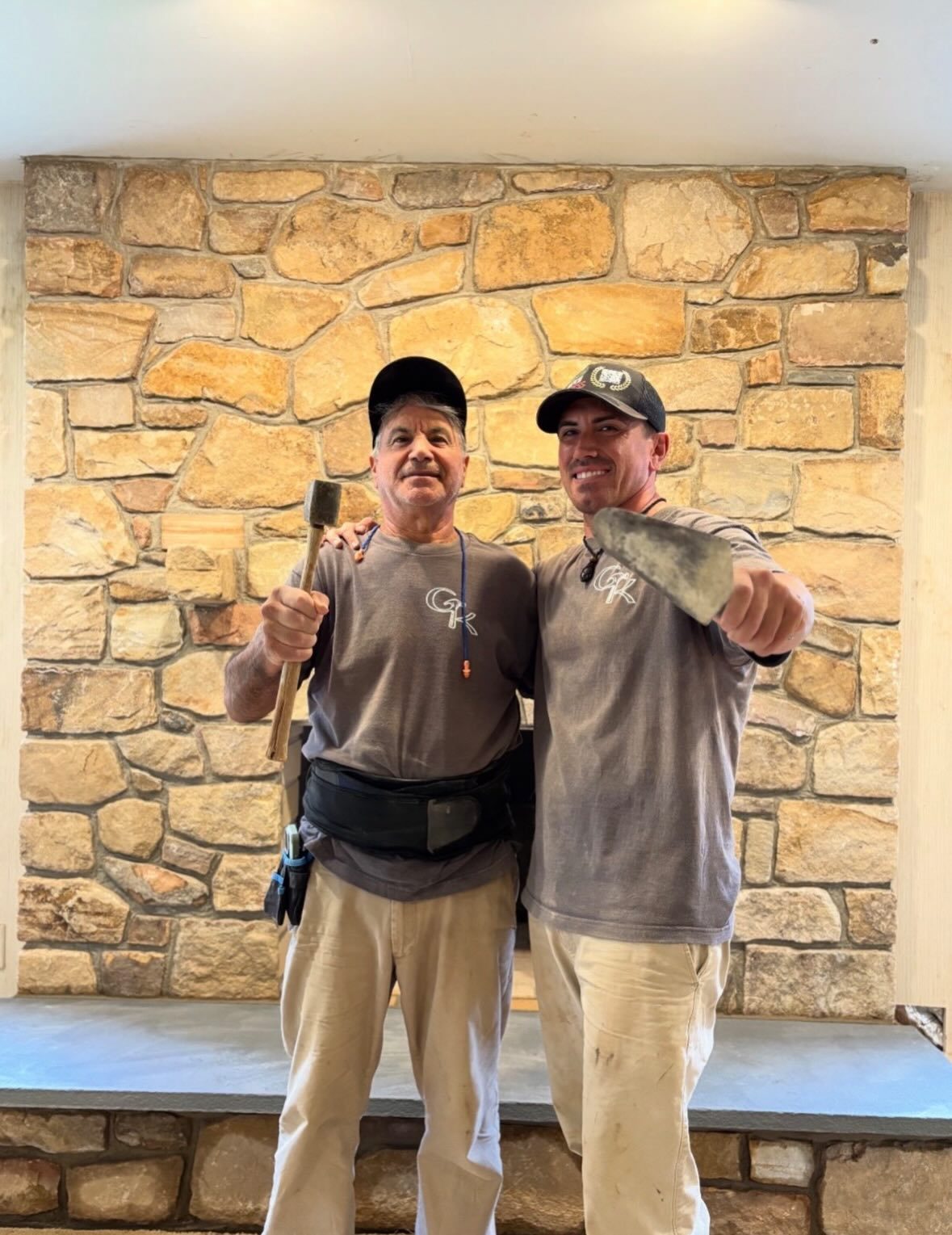
Luciano Sansalone learned stonework at fifteen beside his father and grandfather in Italy and has run American Stone LS in Bucks County for over forty years. His son Alex is the fourth generation. The two of them walk every property, draw every design and set the stone themselves. Read our story.