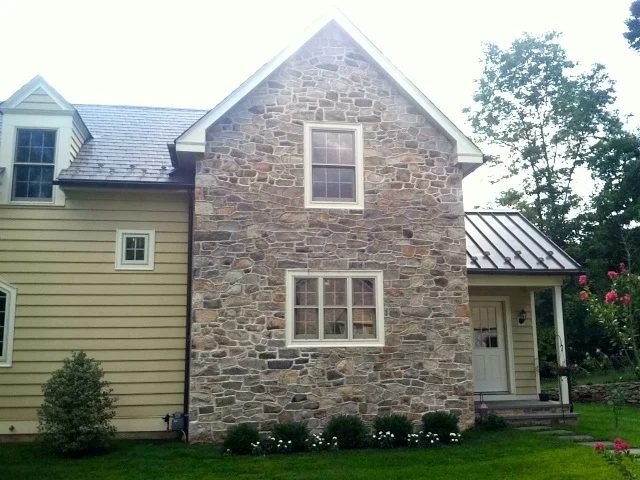
The short answer
If the stones are sound and the structure is still standing true, restore it: repoint the joints, reset or replace the few loose stones, and fix the drainage. Restoration keeps the original stone and character and usually costs a fraction of tearing down and rebuilding. Rebuild only the sections that are actually failing, such as a bulging wall, a leaning chimney or a wall with no footing, and save the rest.
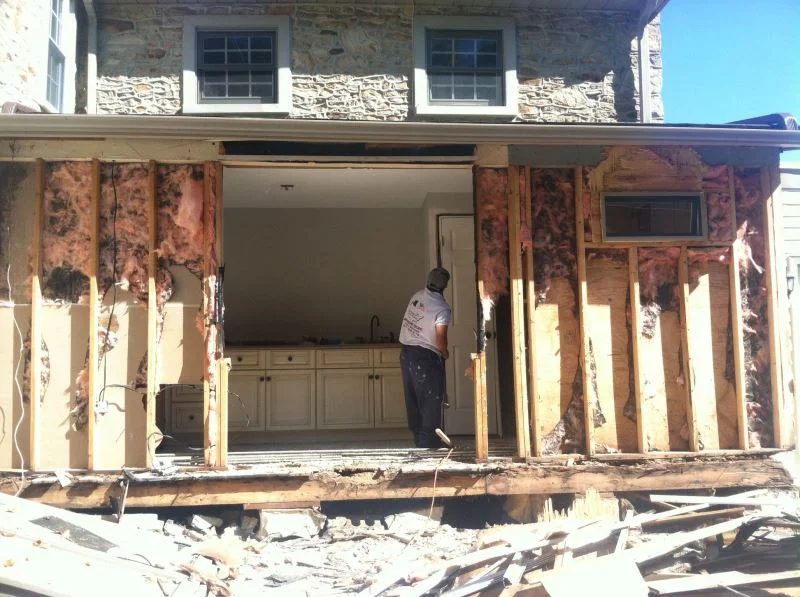
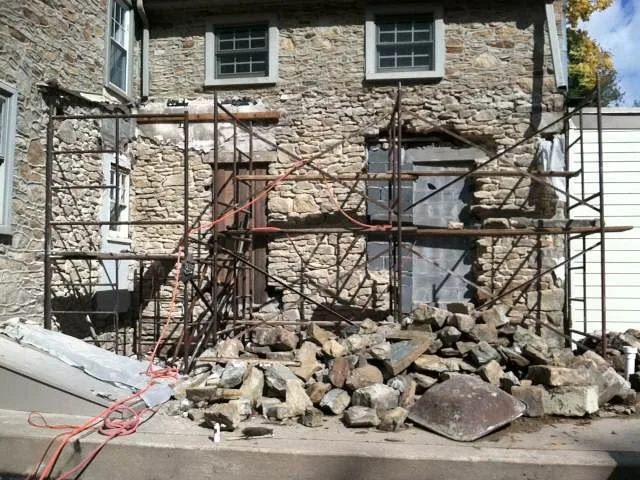
A lot of the calls we get start with, "I think we need to tear it all out." A chimney with open joints, front steps that rock, a garden wall with a few stones on the lawn. Sometimes another contractor has already quoted a full replacement. More often than not, we walk the job and say the words people do not expect from a mason: you do not need a new one. You need this one taken care of.
Stone does not wear out. Joints and drainage do.
Natural stone set two hundred years ago is, in most cases, as good as the day it was quarried. What fails is everything around it: the mortar between the stones, the soil underneath, and the water that has nowhere to go. Fix those, and the stone carries on for another century.
That is why restoration so often makes sense. You are not replacing the expensive, irreplaceable part. You are renewing the cheap, sacrificial parts that were always meant to be renewed.
What restoration usually involves
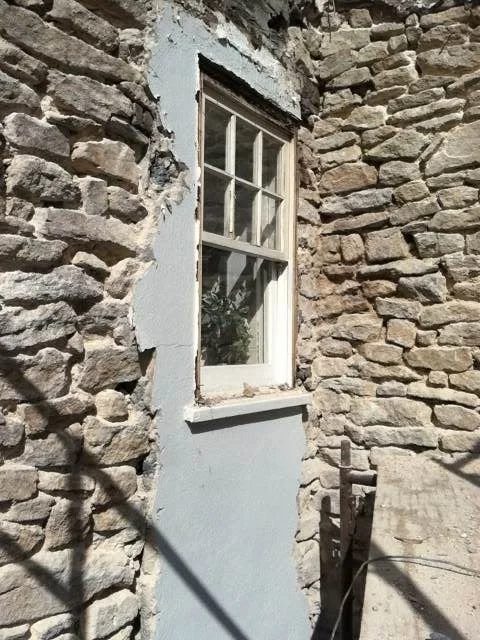
- Repointing the failing joints with the right mortar, raked out and packed by hand.
- Resetting loose or dropped stones, and replacing the occasional cracked one with a matching stone.
- Fixing the water. Redirecting downspouts, regrading soil, adding drainage behind a wall. If you skip this, the problem comes back.
- Rebuilding only what has truly failed, such as a top course, a cap or one corner, using the original stone wherever possible.
Why restoration costs less
We will not quote prices in an article, because every wall is different. But the logic is easy to follow. A full rebuild means demolition, hauling away the old material, excavation, new footings, new stone and every stone laid again from scratch. Restoration skips most of that. You keep the foundation that is already there, the stone that is already there and the shape that is already there. You also keep something money cannot buy back: the original stonework of an old house, weathered the way only time can do it.
Then there is the cost of waiting. Repointing a chimney while it is sound is maintenance. Rebuilding a chimney after freeze-thaw has loosened the top courses is construction. The same is true of walls, steps and patios.
When rebuilding really is the right call
We are honest about this too. A section needs rebuilding when:
- A wall is bulging, leaning or rotating outward, not just missing mortar.
- A chimney leans or the top courses move by hand.
- Steps or a patio have sunk because there was never a proper base underneath.
- A retaining wall has failed because water had no way out from behind it.
- Previous repairs used hard cement that has destroyed the faces of the stone.
Even then, we rebuild the section that failed, not everything in sight, and we lay the original stone back on a real foundation. Our rule on new work is to pour proper concrete footings and let them cure for days before stone goes on, because the ground moves and our work should not.
A real example
Alex filmed one of our favorite small jobs: stone steps built in the 1930s that the owners assumed had to go. The stone was beautiful and solid. What had failed was the mortar and the setting bed under a few treads. We reset what had moved, repointed the rest and the steps were good for another lifetime, still looking like they belong to the house.
Our advice
Before you sign for a teardown, get a second opinion from a mason who does restoration, not only new construction. Ask what exactly has failed and why. If the answer is "the joints and the water," you are probably looking at restoration. Read about repointing to stop water damage and why retaining walls fail, or ask us to take a look. The estimate is free, and so is the honest answer.
Questions we hear on site
How do I know if a stone wall can be saved?
Is rebuilding ever cheaper?
Can you reuse the original stone if a section must be rebuilt?
What maintenance does stonework need?
Further reading
About the authors
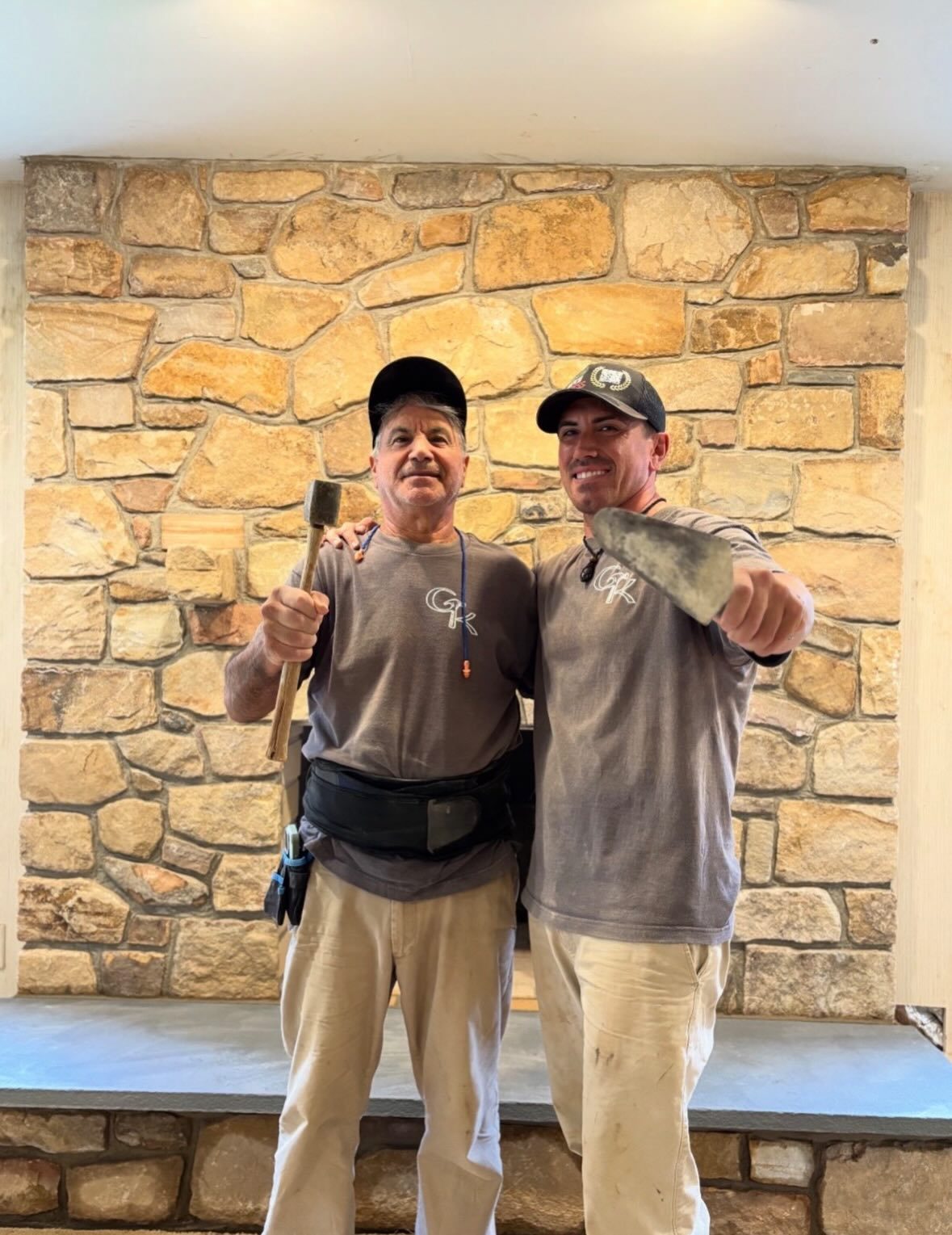
Luciano Sansalone learned stonework at fifteen beside his father and grandfather in Italy and has run American Stone LS in Bucks County for over forty years. His son Alex is the fourth generation. The two of them walk every property, draw every design and set the stone themselves. Read our story.