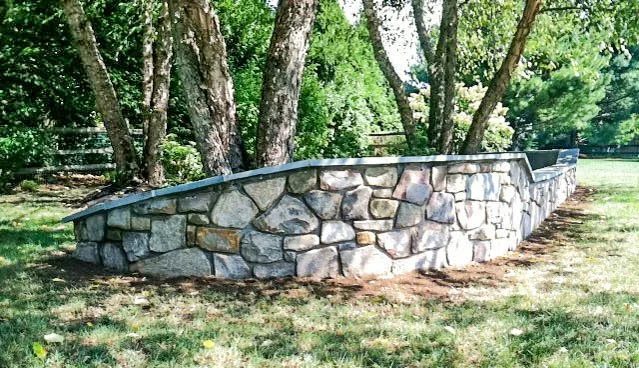
The short answer
Most stone retaining walls fail because water builds up behind them. Wet soil is heavier and pushes harder, and in winter it freezes and heaves. A wall that lasts needs a solid footing below frost, free-draining stone backfill, a way for water to escape such as weep holes or a drain pipe, and a slight backward lean. If your wall is only losing mortar or a few stones, it can usually be repaired. If it is bulging, leaning or rotating, the drainage behind it has failed and that section needs to be rebuilt properly.
We have built hundreds of retaining walls across Pennsylvania and New Jersey, and we have taken down plenty that other people built. When an old wall bellies out over a driveway or slumps into a garden, people usually blame the weight of the hill. Nine times out of ten the real culprit is water.
What a retaining wall is really fighting
Dry soil leans on a wall. Wet soil pushes. When rain and snowmelt soak the ground behind a wall and the water has nowhere to go, the soil gets heavier and the water itself presses against the back of the stone. Engineers call that hydrostatic pressure, and it is widely described as the most common cause of retaining wall failure. Then winter comes, the wet soil freezes and expands, and it shoves the wall again. Every year, a little more.
A wall built without drainage is fighting a battle it eventually loses.
What a wall needs to last for generations
A real footing
We pour concrete footings below the frost line and let them cure for days before a single stone goes on. In much of southeastern Pennsylvania that means footings around three feet down, but your township's code sets the actual number. A wall sitting on loose soil or a few inches of gravel will move when the ground freezes.
Free-draining backfill
Directly behind the wall goes clean crushed stone, not the clay that came out of the hole. Clay holds water against the wall. Stone lets it fall to the bottom, where it can be carried away.
A way out for the water
Weep holes through the base of the wall, a perforated drain pipe along the footing that runs to daylight, or both. Filter fabric between the soil and the stone keeps silt from clogging the drainage over time.
A slight lean back into the hill
A good wall leans gently into what it holds. It is old knowledge, and it still works.
Warning signs your wall is in trouble
- A belly or bulge in the face of the wall.
- The top leaning out past the bottom.
- Cracks that get wider every season, especially stepped cracks.
- Stones pushed out of line or dropping out.
- Soil washing out at the base, or mud weeping through the face after rain.
- Weep holes that never drip, which may mean they are clogged.
- Puddles or soggy ground along the top of the wall.
Repair or rebuild?
If the wall is standing straight and the problem is open joints, a missing cap or a few loose stones, it is a repair: repoint, reset the stones, cap it, and make sure the water at the top is directed away. That is what most old walls need.
If the wall is bulging, leaning or rotating, the drainage behind it has failed or never existed. Pointing the face will not hold back the hill. That section has to come down, the footing and drainage get done right, and the stone goes back up. We save and relay the original stone, so a rebuilt section still looks like it belongs to the property.
Tall walls, walls that hold up driveways or buildings, and walls on steep slopes often need a permit and sometimes an engineer's design. Ask your township before you start, and do not let anyone talk you into skipping it.
A wall should be the best seat in the yard
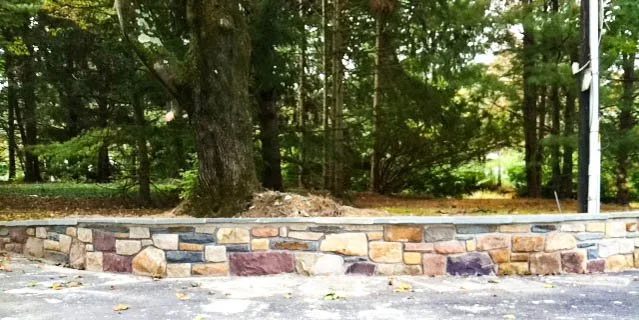
A retaining wall built right does more than hold dirt. It levels a lawn, frames a garden, and with a bluestone cap it becomes the place everyone sits on a summer night. See some of our walls and pillars, and if yours is starting to lean, call us before it lets go. Fixing a section is much less painful than cleaning up a collapse.
Questions we hear on site
How do I know if my retaining wall is failing?
Can a leaning retaining wall be straightened?
Do I need a permit or an engineer for a retaining wall?
Is a dry-stacked wall better than a mortared one?
Further reading
About the authors
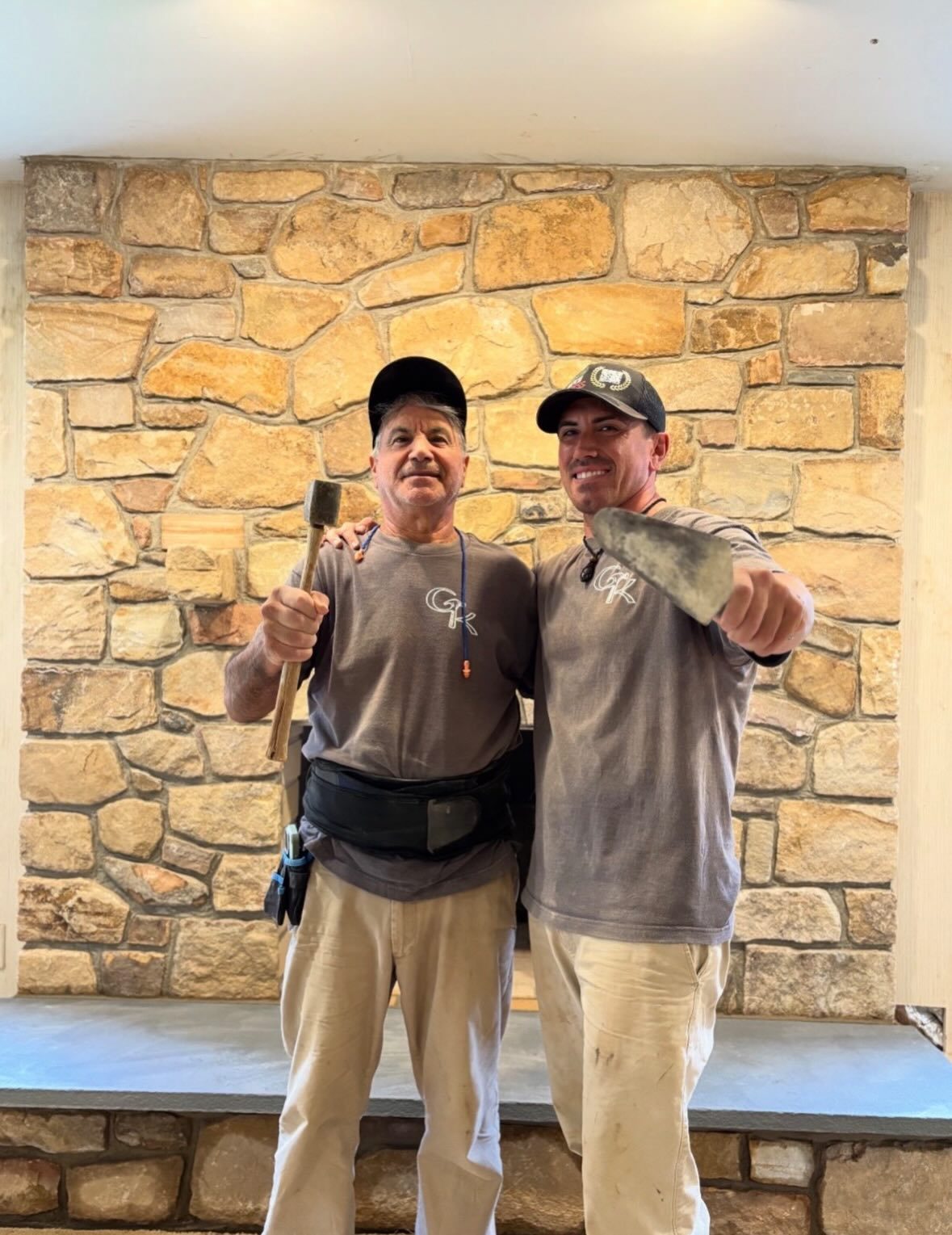
Luciano Sansalone learned stonework at fifteen beside his father and grandfather in Italy and has run American Stone LS in Bucks County for over forty years. His son Alex is the fourth generation. The two of them walk every property, draw every design and set the stone themselves. Read our story.